Introduction
According to industry data, retaining wall projects average $6,073 nationally, but many homeowners discover costs can balloon to nearly double that figure when drainage systems fail or permits are missed. A project budgeted at $4,000 can quickly escalate to $8,000 when water damage forces wall replacement, soil conditions require additional excavation, or local code enforcement halts work on unpermitted structures.
Retaining walls typically cost between $40 and $360 per linear foot depending on material type, wall height, and site conditions. Retaining walls aren't inherently expensive. Costs tend to spiral when homeowners choose materials unsuited to their site, underestimate drainage requirements, or design walls that cross permit thresholds.
This guide breaks down where retaining wall costs actually come from — material comparisons, drainage planning, and permit considerations — so you can make decisions that hold up both structurally and financially.
TL;DR
- Treated timber and basic concrete blocks start at $15–$30 per square foot, but wood may need full replacement within 15–20 years
- Drainage failure, permit-triggering heights (32–48 inches), and poor site prep create more hidden costs than material choice
- Walls under 4 feet, gravel backfill with perforated drain pipe, and local material sourcing cut total project costs significantly
- In Wisconsin's freeze-thaw climate, moisture-absorbing materials fail faster—factor in long-term repair costs when comparing options
How Retaining Wall Costs Typically Add Up
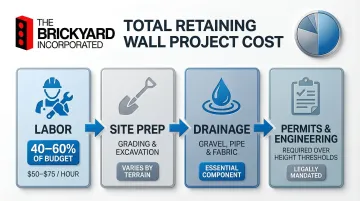
Material cost represents only one component of total retaining wall expense. Labor accounts for 40–60% of overall project budgets, with professional contractors charging $50–$75 per hour. Site preparation, drainage components, permits, and structural engineering each add layers of cost that many homeowners don't anticipate until mid-project.
The full cost picture typically includes:
- Labor: 40–60% of total project budget at $50–$75/hour
- Site prep: Grading, excavation, and base compaction
- Drainage: Gravel backfill, perforated pipe, and filter fabric
- Permits and engineering: Required for walls over a certain height in most municipalities
Drainage is where costs compound fastest when treated as optional. A wall built without proper backfill drainage may appear stable at first, but progressively shifts, cracks, or collapses as hydrostatic pressure builds behind it. Inadequate drainage is the leading cause of retaining wall failure.
Fixing drainage problems after construction runs $60–$70 per linear foot, and that figure doesn't include the $20–$30 per linear foot to demolish the failed wall first.
Those costs rarely surface until the wall faces its first stress test: heavy rain or the freeze-thaw cycles that hit Wisconsin hard every winter. Upfront planning — particularly drainage design and material selection matched to site conditions — is the most effective cost-control move available before construction starts.
Key Cost Drivers for Retaining Walls
Material type is the most visible cost factor, but not always the most significant. A $15-per-square-foot timber wall installed without drainage in clay-heavy soil will fail faster and cost more over its lifecycle than a $35-per-square-foot concrete block wall with proper backfill and drainage infrastructure.
Wall height and length multiply costs non-linearly:
- 2-foot walls: $40–$200 per linear foot
- 4-foot walls: $200–$280 per linear foot
- 6-foot walls: $360+ per linear foot
In Milwaukee, retaining walls supporting less than 32 inches of unbalanced fill are exempt from building permits. Walls exceeding 4 feet typically require permits and structural engineering, adding $350–$750 in engineering fees alone. Designing walls just under these thresholds avoids regulatory costs and delays.
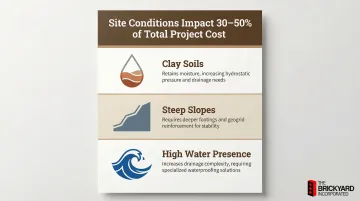
Site conditions—soil type, slope angle, water presence—determine excavation depth, drainage complexity, and backfill quantities. These variables often account for 30–50% of total project cost, so assess them before settling on a material or design.
Key site-driven cost factors include:
- Clay soils: Retain water and exert higher hydrostatic pressure, requiring more robust drainage systems
- Steep slopes: Need deeper footings and potentially geogrid reinforcement layers
- High water presence: Increases drainage infrastructure complexity and material volume requirements
Cost-Reduction Strategies for Retaining Walls
The most effective cost-reduction strategies vary based on whether costs stem from material selection, project execution decisions, or site conditions. Addressing the right lever matters more than simply choosing the cheapest material at the supply yard.
Strategies That Reduce Costs by Choosing the Right Material
Material selection made before construction begins has the largest impact on both upfront cost and total lifecycle expense. The cheapest option today isn't always the most affordable over ten years.
Treated timber and railroad ties cost $15–$30 per square foot, making them the lowest upfront investment for walls under 4 feet on stable, well-drained soil. The trade-off: wood lasts only 15–20 years untreated, or 20–30+ years when pressure-treated, and degrades faster in wet Midwest climates due to rot, moisture absorption, and pest damage. Factor replacement costs into your true cost comparison.
Interlocking concrete retaining wall blocks offer strong mid-range value at $30–$50 per square foot. These modular units are DIY-friendly, don't require mortar for shorter walls (reducing labor costs), and last 50–100 years when properly installed. They're available in multiple aesthetic finishes, making them suitable for visible landscape applications.
Cinder blocks and basic concrete masonry units provide the most cost-effective solution when appearance isn't a priority—behind fences, supporting garden beds, or in utility areas. They're widely available, easy to work with, and deliver long-term durability when installed with proper drainage.
Reclaimed and salvaged stone or brick offer both budget savings and distinctive character. Reclaimed materials often cost less than new equivalents while providing authentic patina and proven durability.
Local sourcing is critical here. The Brickyard in Milwaukee maintains the largest stock of reclaimed brick and paving stones in the U.S., with experienced staff who can match materials to specific site conditions, budget constraints, and structural requirements.
Strategies That Reduce Costs by Changing How the Project Is Managed
Project planning and execution decisions prevent cost overruns, particularly the steps most homeowners skip when trying to move quickly or cut corners.
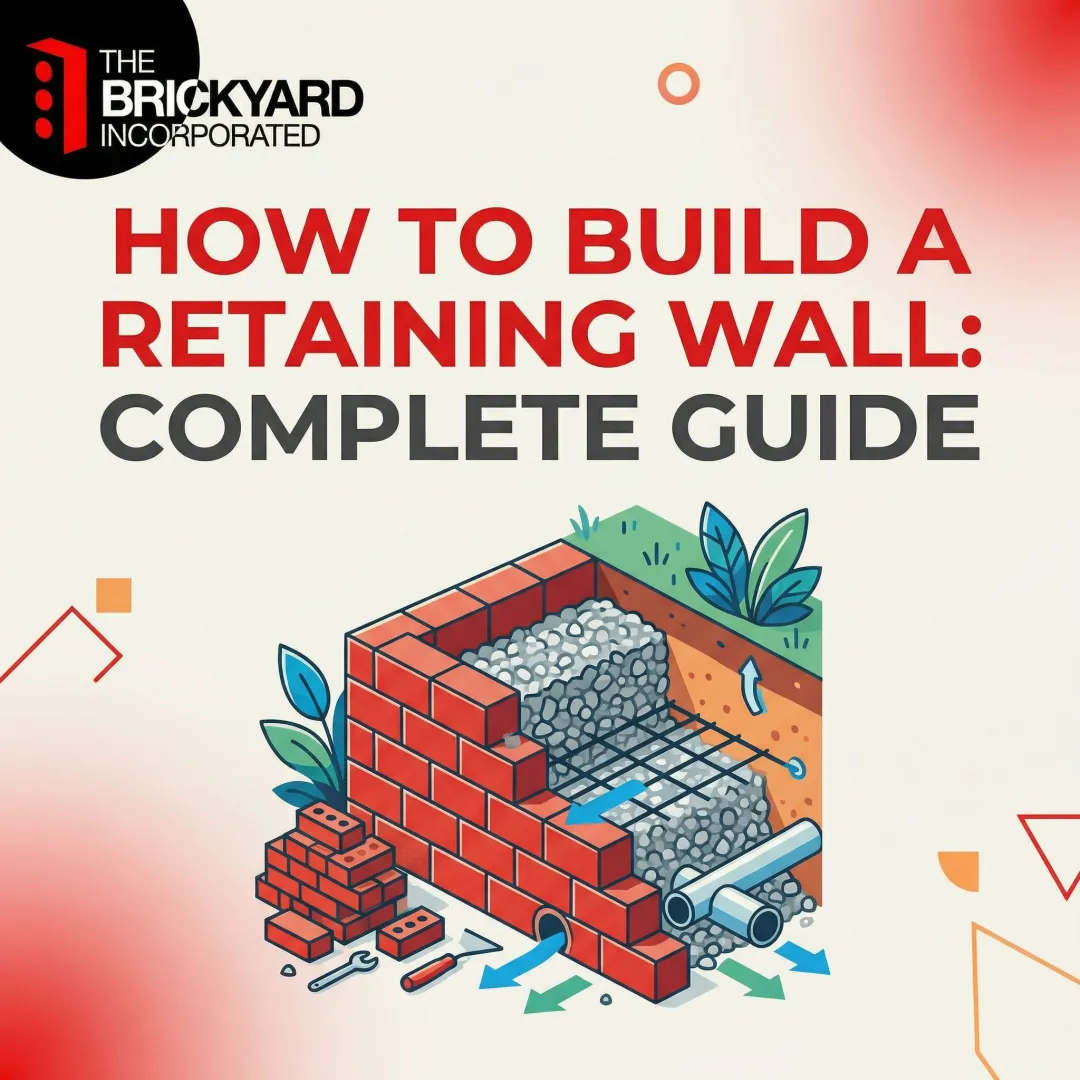
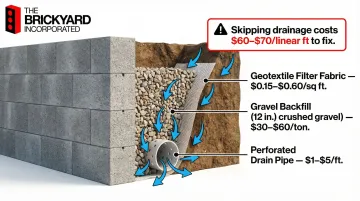
Plan drainage from the start, not as an afterthought. A complete drainage system requires three components:
- 12-inch minimum gravel backfill layer behind the wall
- Geotextile filter fabric separating soil from gravel
- 4-inch perforated drain pipe running behind the wall to daylight or underground drainage
These materials cost $1–$5 per foot for pipe, $30–$60 per ton for gravel, and $0.15–$0.60 per square foot for fabric. Skipping it costs $60–$70 per linear foot to excavate and fix drainage failures after the fact.
Keep wall height below permit thresholds where functionally possible. For garden beds, raised planting areas, or mild slope correction, walls under 3–4 feet accomplish the goal while avoiding permit fees and engineering requirements.
When height is necessary, terracing with two shorter walls separated by a planting shelf is often cheaper than a single tall wall. It also avoids the structural engineering requirement that kicks in when walls exceed local height limits.
Phase large projects over time. For homeowners managing long sections of slope, building in phases—one section per season or budget cycle—spreads material and labor costs without compromising structural integrity, provided each phase is properly terminated and drained.
Strategies That Reduce Costs by Addressing the Conditions Around the Wall
The environment and landscape surrounding a wall can amplify or reduce total project cost. Sometimes adjusting the context is cheaper than changing the wall itself. Three approaches worth considering:
- Combine walls with slope planting. Deep-rooted shrubs or groundcover on the uphill side absorb soil pressure and reduce erosion, potentially allowing a shorter or lighter wall to do the same job. This works especially well for modest residential slopes where aesthetics and erosion control are both priorities.
- Local sourcing cuts delivery costs. Limestone, granite, and fieldstone are abundantly available in the Midwest at lower cost than specialty or imported stone. A local masonry distributor—rather than a big-box retailer—typically offers better pricing, greater variety, and advice tailored to local soil and climate. The Brickyard's staff can point homeowners toward materials that balance cost, durability, and aesthetics for southeastern Wisconsin specifically.
- Match material durability to actual environmental stress. In climates with hard winters and freeze-thaw cycles like southeastern Wisconsin, materials that absorb water and expand—such as certain untreated timbers—degrade faster and require more frequent maintenance. Segmental concrete blocks meeting ASTM C1372 freeze-thaw durability standards extend service life and reduce repair frequency, lowering the true cost per year of ownership.
Conclusion
Reducing retaining wall costs starts with understanding where expenses actually originate—not in the material itself, but in decisions around height, drainage, site preparation, and sourcing. Cutting the right costs requires knowing which trade-offs deliver value and which create expensive problems later.
A retaining wall is a long-term investment in property stability and usability. The most affordable wall performs well for decades without requiring repair. That means matching materials to site conditions, planning drainage before breaking ground, and resisting the pull of the lowest upfront price when it compromises longevity. Get those decisions right, and affordability follows.
If you're sourcing materials for a retaining wall project in the Milwaukee area, The Brickyard carries a broad selection of retaining wall products and hardscape materials — and the staff to help you weigh your options before you buy.
Frequently Asked Questions
What is the cheapest retaining wall to build?
Treated timber and basic concrete block or cinder block walls are the lowest-cost options upfront. Treated timber starts at $15–$30 per square foot and works well for short walls, though you'll need to factor in replacement costs within 15–30 years depending on climate exposure and maintenance.
What to use for a short retaining wall?
For walls under 3–4 feet, interlocking retaining wall blocks, stacked stone, treated timber, and cinder blocks are all practical choices — your best option depends on your aesthetic preference, soil conditions, and whether you're going DIY or hiring a contractor.
Does a 3 ft retaining wall need drainage?
Yes, even shorter walls benefit from drainage. A gravel backfill layer and perforated drain pipe behind the wall prevent hydrostatic pressure that causes bulging or failure. Drainage becomes especially critical in wet climates or clay-heavy soils common in the Midwest.
How much does it cost to build a 10 ft retaining wall?
A 10-foot tall retaining wall is a major structural installation requiring engineering review, permits, and robust drainage systems. Costs typically range from $300 to $900 per linear foot, with material costs representing only a portion of total project expense due to engineering, excavation, and structural reinforcement requirements.
How much does a natural stone retaining wall cost?
Natural stone retaining walls cost $20–$100 per square foot installed, with variation based on stone type and wall complexity. While stone carries a higher upfront cost, it offers exceptional longevity (100–200 years), minimal maintenance, and strong curb appeal that contributes to property value.
What is the best natural stone for retaining walls?
Granite, limestone, and fieldstone are the most commonly used natural stones for retaining walls. Choose based on local availability, wall height, and your landscape's aesthetic — locally sourced stone typically delivers the best value and handles Midwest freeze-thaw cycles well.