
Introduction
Retaining walls hold back soil, prevent erosion, create usable yard space, and protect your property from water damage. They're one of the more consequential investments a homeowner can make in their yard. The landscaping services industry reached $188.8 billion in 2025, with homeowners spending $63 billion annually on outdoor improvements alone.
Retaining wall prices vary dramatically based on material choice, wall dimensions, site conditions, and whether you're tackling a DIY build or hiring a professional. This guide breaks down what to expect at every price point, including what most homeowners overlook when budgeting.
TLDR
- Professionally installed retaining walls cost $3,200 to $9,200 on average; DIY material costs run considerably less
- Material type drives the biggest price gap—timber and natural stone can differ by 400%
- Wall height multiplies costs fast; walls over 3 feet often require engineering and permits
- Drainage, site prep, and permits add hundreds to thousands—skip them and the wall will fail early
How Much Does a Retaining Wall Cost?
Retaining wall pricing doesn't follow a single formula—costs depend on whether you're buying materials only, hiring a contractor, or doing a hybrid approach. Misunderstanding this upfront leads to budget shortfalls mid-project.
Typical Cost Ranges
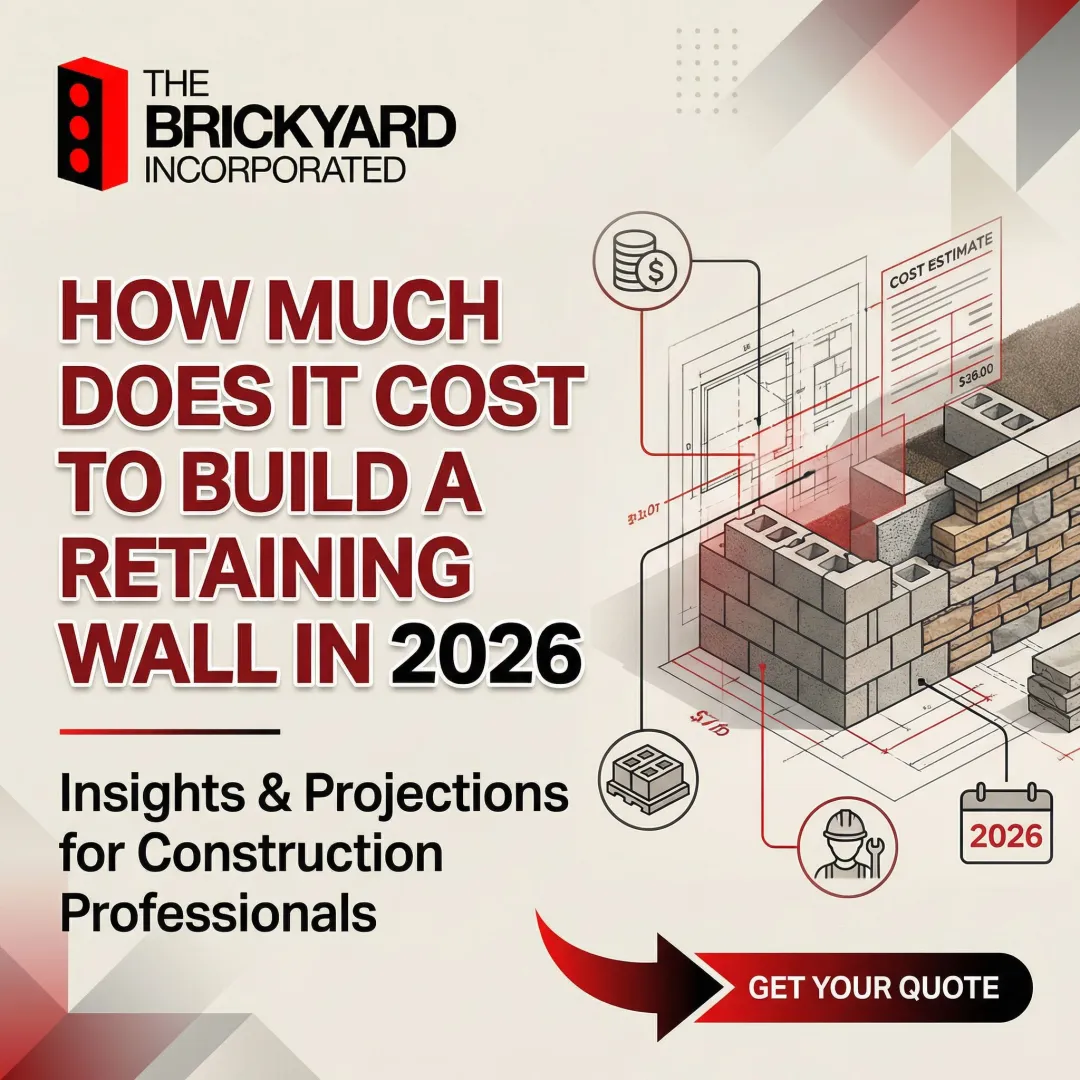
Nationally, professionally installed retaining walls cost $3,196 to $9,201, with the average project landing around $6,072. Per-linear-foot costs range from $40 to $360 depending on wall height (2 to 6 feet), material choice, and site complexity.
Cost breakdown by project scale:
- Low end: $4,000 for basic installations
- Average: $6,000–$7,000 for typical residential projects
- High end: $21,000–$39,000 for tall engineered walls or premium stone
Entry-Level / Budget Range
The lower price tier includes timber, basic concrete block, or DIY-friendly modular block walls under 2–3 feet tall. These projects typically cost $15–$30 per square foot for materials, suitable for homeowners tackling basic slope control themselves. Budget options work well for:
- Low walls (under 3 feet) where permits aren't required
- Temporary installations or phased projects
- Properties where function matters more than appearance
Mid-Range
Mid-range projects feature professionally installed concrete block or brick retaining walls standing 3–4 feet tall with basic drainage systems. Typical costs run $45–$120 per linear foot for a 3-foot wall.
This tier suits most residential homeowners wanting durability without premium stone pricing. With proper drainage, these walls routinely last 50–100 years.
Premium / High-End Range
High-cost projects involve natural stone, boulder walls, or engineered structures over 4 feet requiring permits and structural engineer approval. Custom designs, difficult terrain, and specialty materials like reclaimed stone push costs to $75–$300 per linear foot.
Best suited for projects where curb appeal, longevity, and property value all factor into the decision.
Important: Contractor quotes typically include labor and materials but may exclude permitting fees, drainage systems, or site grading. Always confirm what's covered before signing.
Key Factors That Affect Retaining Wall Cost
Retaining wall pricing is shaped by material selection, project scale, site-specific challenges, and regulatory requirements—understanding each helps avoid cost surprises.
Material Type
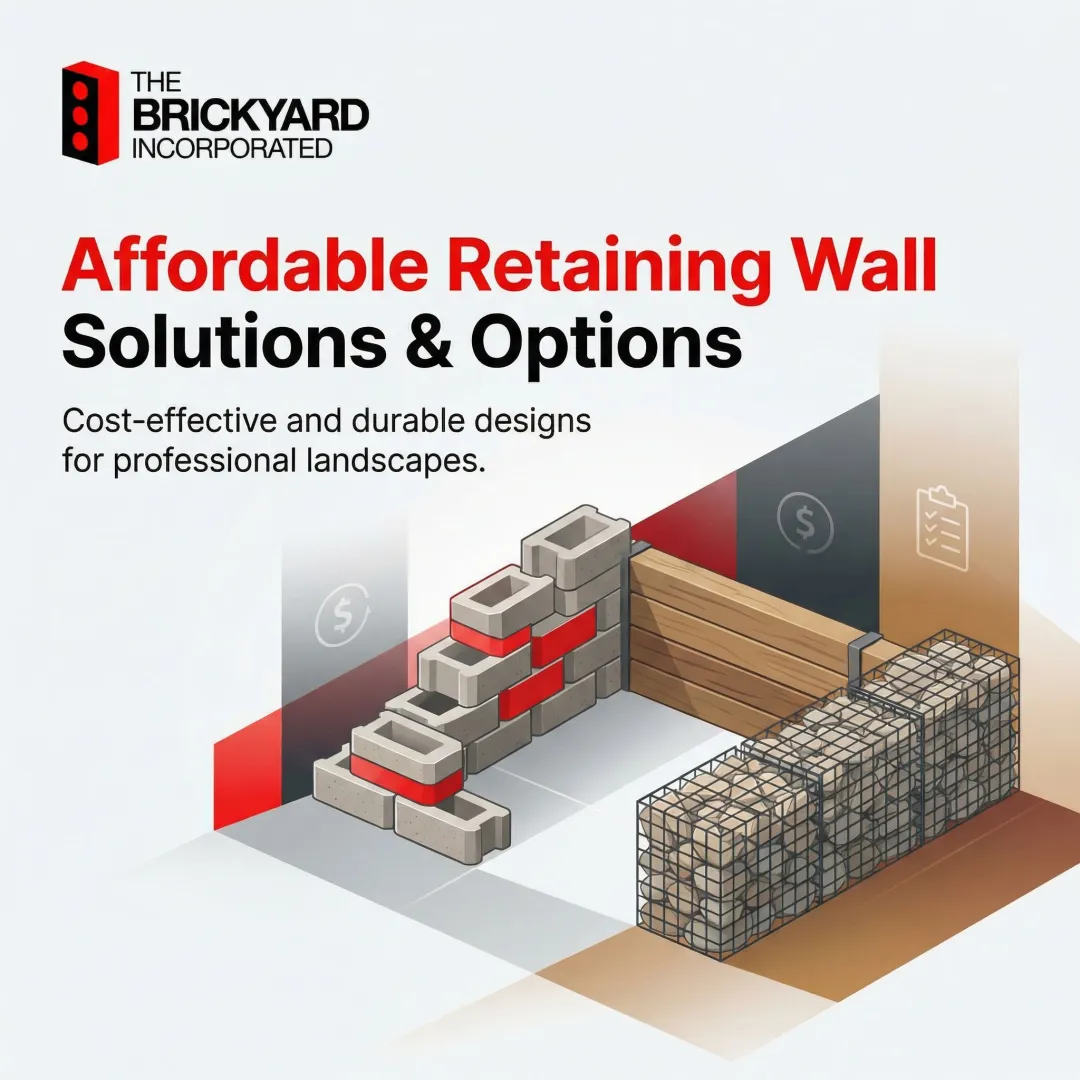
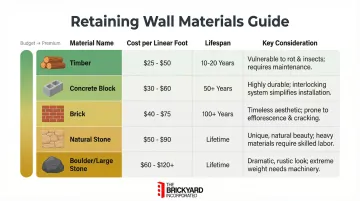
Material is the most significant cost variable. Here's how common types compare:
| Material | Cost per Linear Foot (3-ft wall) | Lifespan | Key Considerations |
|---|---|---|---|
| Timber/Pressure-Treated Wood | $45–$90 | 10–20 years | Vulnerable to moisture and freeze-thaw cycles |
| Concrete Block/SRW Systems | $45–$120 | 50–100 years | Best value for Midwest climates; minimal maintenance |
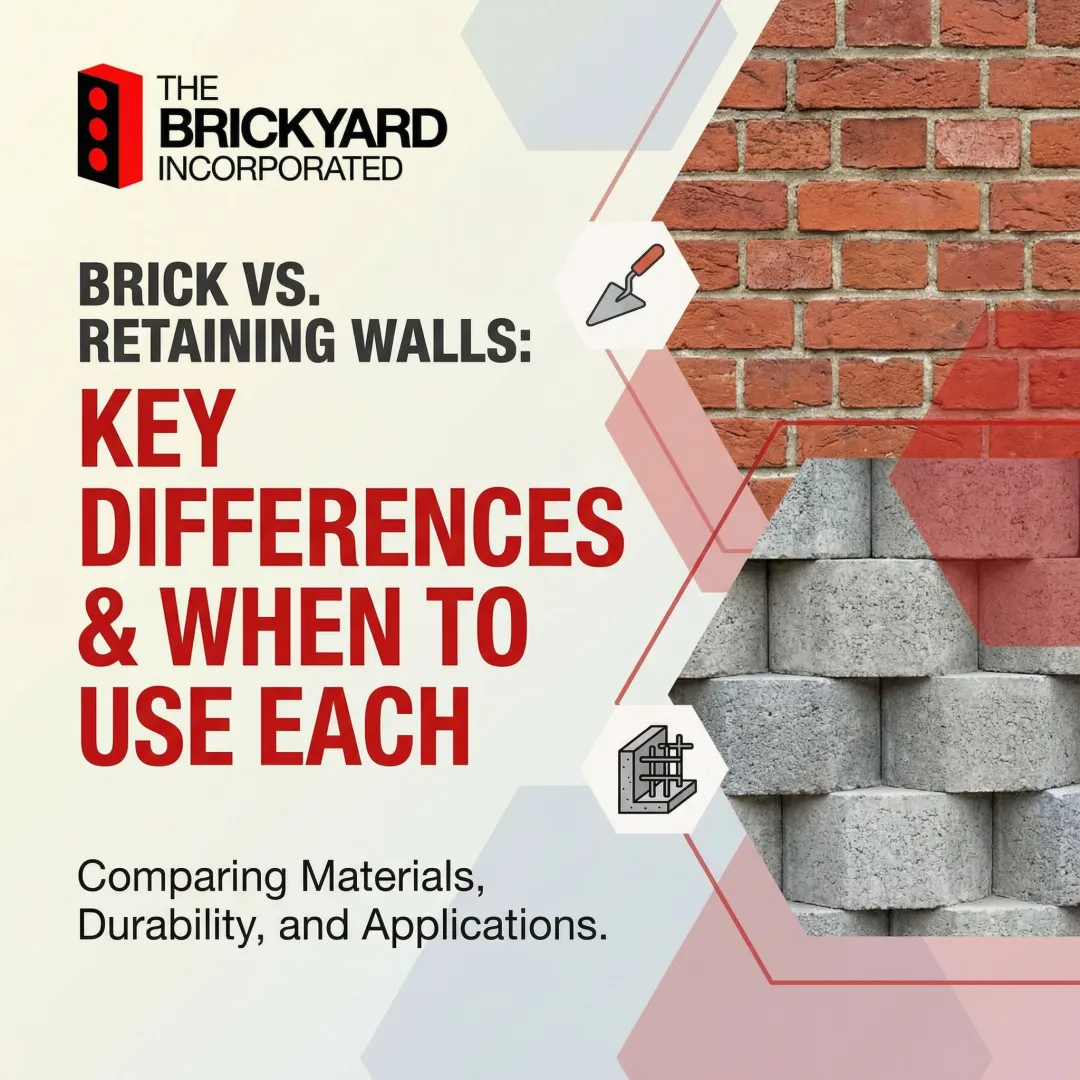
| Brick | $60–$180 | 100+ years | Often requires concrete core with brick veneer |
| Natural Stone | $39–$300 | 50–200 years | Highly labor-intensive; flexes with soil movement |
| Boulder/Large Stone | $75–$150 | 50–100+ years | Requires heavy machinery for placement |
The Brickyard stocks concrete block systems, natural stone, cultured stone, and brick from manufacturers including Anchor Diamond, Belgard, Keystone, Unilock, and Versa-Lok — so Milwaukee-area homeowners and contractors can compare materials and pricing in a single visit.
Wall Height and Length
Height has an outsized impact on cost. Walls over 3–4 feet typically require a structural engineer's design, deeper footings, and more robust drainage. The traditional "1/3 rule" (bury one-third of the wall's height below grade) drives up material quantities, though modern SRW engineering standards now require only H/20 embedment — height divided by 20, with a 6-inch minimum — on flat terrain.
Example: A 100-foot wall that's 3 feet tall requires 300 linear feet of material. Increase the height to 4 feet, and you're now at 400 linear feet—plus engineering costs, deeper excavation, and more drainage infrastructure.
Site Conditions and Soil Type
Soil type directly affects costs:
- Clay or expansive soil requires more extensive drainage to prevent hydrostatic pressure buildup
- Sandy soil excavates more easily but often needs additional base compaction
- Rocky terrain increases both labor time and equipment costs
Sloped or difficult-access sites—narrow gates, steep grades, or areas requiring hand-hauling materials—can add 25–50% to labor charges.
Labor and Installation Complexity
Labor accounts for 40–60% of total retaining wall costs, with professional crews charging $50–$100 per hour or $15–$50 per square foot. Labor costs increase with:
- Wall height and material weight (stone blocks vs. lightweight concrete)
- Site access (hand-carrying materials vs. equipment delivery)
- Installation complexity (curved walls, stepped courses, or custom patterns)
DIY vs. Professional: DIY builds save on labor but require skill, time, and tool rentals. Professional installation ensures proper drainage, structural integrity, and code compliance—critical for walls over 3 feet.
Permits, Engineering, and Drainage
Milwaukee has stricter requirements than many cities. The City of Milwaukee requires permits for walls supporting 32 inches or more of unbalanced fill, while South Milwaukee requires professional engineering for walls over 3 feet.
Budget for these line items before breaking ground:
- Permits: $50–$450 depending on municipality and wall size
- Structural engineering: $350–$750 for standard residential projects; $500–$2,000+ for complex designs
- Drainage systems: $10–$100 per linear foot for French drains and perforated pipe
Skip the permits and you risk fines, stop-work orders, or being required to tear the wall down entirely.
Cost Breakdown: What You're Actually Paying For
A retaining wall project involves four distinct cost categories beyond the materials themselves: labor, site preparation, drainage, and permits. Knowing what drives each one helps you build a realistic budget before breaking ground.
Materials
Materials typically represent the largest share of total project cost, calculated by wall height × length. Buying from a local distributor with large stock—rather than a big-box store—provides better selection, volume pricing, and materials suited to regional climate conditions like Midwest freeze-thaw cycles.
Material costs by category:
- Budget (timber, basic block): $15–$30 per square foot
- Mid-range (concrete SRW, brick): $15–$60 per square foot
- Premium (natural stone, engineered systems): $25–$100+ per square foot
Labor and Installation
Labor costs are calculated per linear foot or as a percentage of total project cost. Labor typically accounts for 50–60% of a professionally installed wall's total cost. Complex installs—walls with stepped courses, curves, or heavy stone—push that percentage higher.
What drives labor costs up:
- Material weight and handling difficulty
- Site access restrictions
- Wall height and total square footage
- Need for excavation equipment or cranes
Site Preparation and Drainage
Site prep includes excavation, grading, compacting the base, and installing drainage systems. Poor drainage leading to hydrostatic pressure is the leading cause of retaining wall failure, so skipping it typically costs far more in repairs down the road.
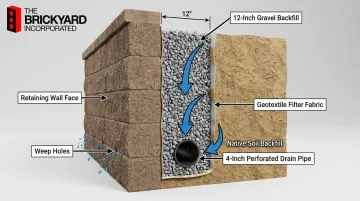
Standard drainage system includes:
- 12-inch column of clean, free-draining gravel behind the wall
- 4-inch perforated drain pipe at the base
- Geotextile filter fabric to prevent soil migration
- Weep holes for water escape
Typical costs: $10–$100 per linear foot for drainage; $60–$70 per linear foot to retrofit drainage on existing walls.
Permits and Engineering
Permits and engineering are separate line items. Milwaukee's 32-inch threshold means many mid-sized residential walls require both, adding $400–$1,200 to project costs. Skipping permits can result in fines or mandatory removal, both of which cost significantly more than the permit fee.
Low-Cost vs. High-Cost Retaining Walls—What's the Difference?
A lower upfront cost doesn't always mean a lower total cost over time, especially if the wall fails prematurely or requires frequent maintenance.
| Budget Materials (Timber, Basic Concrete Block) | Premium Materials (Natural Stone, Engineered Concrete) | |
|---|---|---|
| Lifespan | 10–40 years (timber lasts just 10–20 years in freeze-thaw climates) | 75–200 years (concrete SRW systems: 75–100 years; natural stone: 200+ years) |
| Maintenance | High — timber requires regular sealing and rot inspection | Minimal — occasional cleaning and joint inspection |
| Best for | Low walls, temporary use, limited budgets | Steep slopes, high water exposure, high-visibility areas |
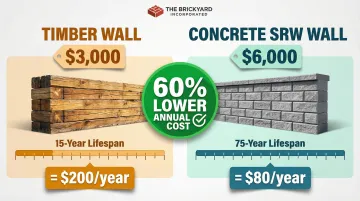
Cost-per-year analysis: A $3,000 timber wall lasting 15 years costs $200/year. A $6,000 concrete SRW wall lasting 75 years costs just $80/year—60% less over time.
That gap widens further once you factor in replacement and repair costs—making material choice one of the highest-leverage decisions in any retaining wall project.
What Most People Miss When Budgeting for a Retaining Wall
Drainage Is Not Optional
Many homeowners budget for materials and labor but treat drainage as an afterthought. Hydrostatic pressure from water buildup is the number one reason retaining walls fail. Proper drainage systems—gravel backfill, perforated pipe, filter fabric—are mandatory, not upgrades.
The math: Installing drainage costs $10–$100 per linear foot. Rebuilding a failed wall costs $70–$125 per linear foot—plus the cost of a new drainage system. Skipping drainage to save $1,000 can cost you $8,000+ in repairs within 5–10 years.
Permits and Inspections Add Time and Money
Many homeowners underestimate permit timelines (sometimes weeks) and costs. Milwaukee's 32-inch threshold means even modest 3-foot walls require permits, adding $50–$450 in fees plus potential delays. South Milwaukee's engineering requirement adds another $350–$750 for professional design.
Plan ahead: Submit permit applications 4–6 weeks before your planned start date to avoid project delays.
Material Quality Affects Total Lifecycle Cost
Once permits are sorted, material selection is the next budget decision with long-term consequences. Choosing the cheapest option upfront often means higher repair or replacement costs within 10–20 years. Evaluate cost-per-year-of-service rather than sticker price.
Milwaukee's freeze-thaw cycles are hard on retaining wall materials. Before purchasing, it's worth talking through the trade-offs with a knowledgeable supplier. The Brickyard's team has been advising Milwaukee homeowners and contractors on material performance for over four decades and can help you find options that balance upfront cost with long-term durability.
Frequently Asked Questions
How do you calculate the cost of a retaining wall?
Calculate wall height × total linear footage to determine total square footage, then multiply by cost per linear foot for materials and labor combined (typically $40–$360/LF depending on height and material). Add permitting ($50–$450), engineering ($350–$750), and drainage ($10–$100/LF) on top.
How much does it cost to build a 100 ft retaining wall?
A 100-foot retaining wall costs $4,000–$13,000 for standard residential heights (2–4 feet), with budget timber/block at the low end and mid-range concrete SRW at the high end. For taller walls (5–6 feet) or premium natural stone, expect $21,000–$39,000.
How much is a 3 foot retaining wall?
A 3-foot wall hits a practical sweet spot: it falls just under Milwaukee's 32-inch permit threshold, works across all material tiers, and is manageable for experienced DIYers. Expect $45–$90/LF for timber, $45–$120/LF for concrete block, and $60–$180/LF for brick or stone.
How much does it cost to get a stone wall built?
Natural stone is the most expensive material but also the longest-lasting. Professionally installed stone retaining walls cost $39–$300 per linear foot, with dry-stacked fieldstone at the lower end and mortared limestone or granite at the premium end. Cultured stone veneer over a concrete block core costs $90–$240/LF.
Why are retaining walls so expensive?
Retaining walls bear significant structural loads, which means engineered drainage systems, deep footings, heavy materials, and skilled labor are all required. Each of those line items adds up fast — and walls that fail can cause thousands in property damage, so cutting corners isn't an option.
What is the 1/3 rule for retaining walls?
The 1/3 rule says one-third of the wall's total height should sit below grade — so a wall with 4 feet of visible height needs roughly 2 feet buried, for 6 feet of total material. That said, modern segmental retaining wall standards only require H/20 embedment (height ÷ 20, minimum 6 inches) on flat terrain, which cuts excavation depth and material costs considerably.