Introduction
Picture a homeowner standing in their backyard, envisioning a beautiful patio for summer gatherings, or a contractor preparing to transform a commercial property's entrance with a durable, eye-catching walkway. The challenge? Choosing the right hardscape materials from dozens of options—clay pavers, concrete, natural stone—and understanding which will stand up to Milwaukee's harsh winters while delivering the aesthetic impact the project demands.
This guide covers the essential types of hardscape materials, popular project applications from patios to retaining walls, and how to select pavers that will last decades in Southeastern Wisconsin's freeze-thaw climate. Whether you're a homeowner tackling your first outdoor project or a contractor sourcing materials for a commercial build, the right knowledge here saves time, money, and callbacks down the road.
That investment also holds its value. Hardscaping solves real problems—drainage, erosion, usable outdoor space—while boosting property value. The National Association of Realtors reports that a standard concrete paver patio delivers 95% cost recovery at resale, which means material selection isn't just an aesthetic choice—it's a financial one.
TLDR
- Hardscaping creates functional outdoor spaces using durable materials like brick pavers, natural stone, and concrete
- Clay pavers last 100+ years with permanent color; concrete pavers cost less upfront but offer wider design flexibility
- Common projects include patios, driveways, walkways, and retaining walls—each with specific material requirements
- Milwaukee's 122+ annual freeze-thaw cycles require high-density pavers and a properly engineered base
- Local suppliers stock specialty, reclaimed, and climate-rated materials—along with the expertise to match them to your project
What Are Hardscapes and Why Do They Matter?
Hardscaping covers the non-living, structural elements of outdoor design: patios, walkways, retaining walls, and driveways. These contrast with softscaping elements like plants, grass, and soil, and together they shape outdoor spaces that are both practical and visually appealing.
Tangible Benefits Beyond Curb Appeal
Quality hardscaping delivers measurable returns. According to the National Association of Realtors 2023 Remodeling Impact Report, a standard $10,500 concrete paver patio achieves 95% cost recovery at resale, with homeowners reporting a 9.9 out of 10 satisfaction score. While upscale custom projects in Milwaukee show more conservative 46% cost recoupment, for Milwaukee homeowners, the day-to-day practical value often matters more than resale numbers alone.
Hardscaping addresses real property challenges:
- Redirects water flow and prevents soil erosion on sloped or drainage-prone properties
- Extends usable square footage with defined areas for entertaining, dining, and relaxation
- Replaces high-maintenance grass with durable paver surfaces that need minimal upkeep
- Provides safe, level surfaces for walkways and patios through every season
Stormwater management has become a driving factor in material selection as well. The American Society of Landscape Architects reports 74% consumer demand for permeable paving systems. Permeable interlocking concrete pavements allow rainfall to pass through the surface, reducing runoff and filtering pollutants before they reach municipal water systems.
Types of Brick Pavers and Hardscape Materials
Material choice ranks among the most critical decisions in any hardscape project, directly impacting durability, maintenance requirements, and long-term appearance. The three primary categories—clay/brick pavers, concrete pavers, and natural stone—each offer distinct performance characteristics suited to different applications and budgets.
Clay/Brick Pavers
Clay brick pavers are manufactured from natural clay and shale through kiln-firing at extreme temperatures, creating high-density units with exceptional longevity. Unlike surface-coated materials, the color in clay pavers runs through the entire unit—a result of the natural materials and firing process—making them highly resistant to fading without requiring sealers.
For cold climates like Milwaukee, clay pavers must meet ASTM C902 Class SX standards: minimum 8,000 psi compressive strength and maximum 8.0% cold water absorption to resist freeze-thaw damage. The Brick Industry Association confirms that properly specified clay pavers deliver 100+ year lifespans, with historic installations remaining functional for over two centuries.
Reclaimed brick pavers offer unique value:
- Authentic patina and character impossible to replicate with new materials
- Sustainable reuse of historic building materials
- Compatibility with traditional and historic architectural styles
The Brickyard has maintained one of the largest stocks of reclaimed brick and paving stones in the United States since the early 1970s, sourcing material from historic buildings and structures throughout the region. That depth of inventory gives homeowners and contractors direct access to authentic historical materials—whether for restoration work or designs that call for genuine, aged character.
Concrete Pavers
Concrete pavers are manufactured from Portland cement and aggregate, molded into consistent shapes and sizes. ASTM C936 standards require minimum 8,000 psi compressive strength and maximum 5% water absorption. Unlike clay pavers, concrete units use integral pigments mixed into the concrete or surface-applied color treatments.
Key characteristics:
- Wide range of shapes, sizes, and colors for design flexibility
- Consistent dimensions simplify installation
- Lower upfront cost compared to clay or natural stone
- Color may fade over time due to UV exposure—manufacturers recommend sealing every 3-5 years
Concrete pavers excel in applications requiring specific dimensions, high load-bearing capacity, or modern geometric designs. They're particularly popular for driveways, pool decks, and commercial installations where precise sizing and contemporary aesthetics matter most.
Natural Stone Pavers
Natural stone delivers one-of-a-kind appearance and extreme durability, with performance characteristics varying significantly by stone type:
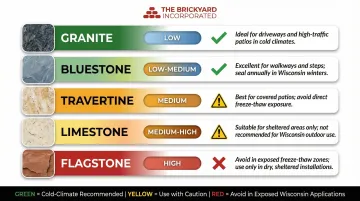
Granite — Igneous rock with ultra-low water absorption (0.05-0.4%), exceptional weathering durability, and high slip resistance. Highly resistant to snow-melting chemicals, making it ideal for Milwaukee's freeze-thaw cycles.
Bluestone — Dense sedimentary stone popular for patios and walkways, offering natural slip resistance and consistent blue-gray coloring.
Travertine — Porous limestone with distinctive vein patterns and warm earth tones. Requires careful sealing in freeze-thaw climates due to higher water absorption.
Limestone — Calcium carbonate-based stone vulnerable to mild acids and freeze-thaw damage if not properly sealed. Absorption rates vary from <1% to >10% depending on variety.
Flagstone — Irregular flat stones (typically sandstone or quartzite) used for natural-looking pathways and patios with wide, mortared joints.
Natural stone selection comes down to two practical criteria for Wisconsin installs: surface texture for slip resistance and porosity ratings for freeze-thaw performance. When in doubt, start with the absorption rate—lower is almost always better for exposed applications in this climate.
Popular Hardscape Applications for Your Outdoor Space
Paver material selection depends on the application. Load requirements, traffic patterns, climate exposure, and design intent vary significantly between project types—knowing the distinctions helps you choose materials that perform and look right for the long haul.
Patios and Outdoor Living Areas
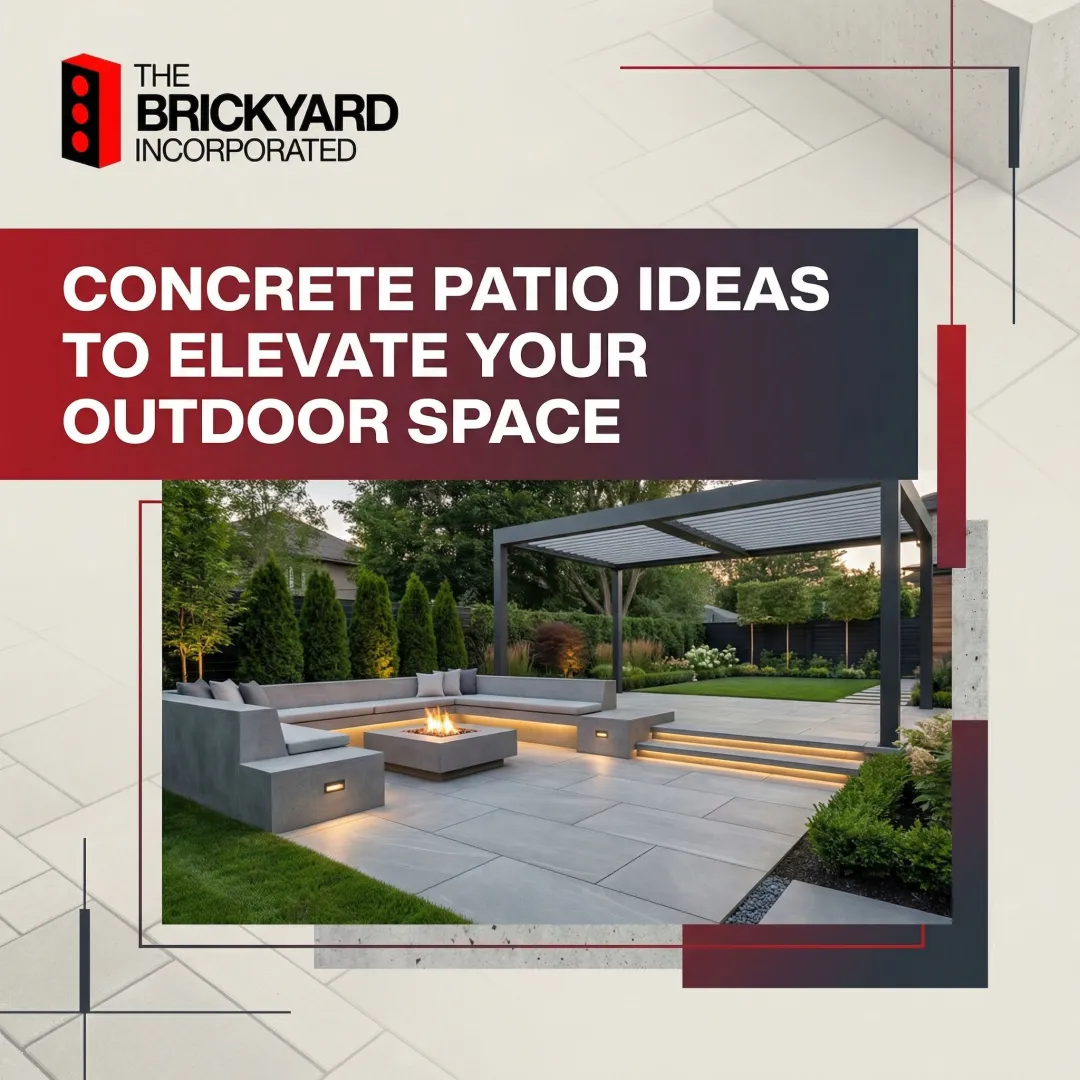
Patios represent the most popular hardscape project, serving as the foundation for outdoor entertaining and relaxation. Material choice significantly affects both aesthetics and comfort underfoot:
- Clay brick pavers provide timeless warmth and require no sealing
- Flagstone delivers natural, organic appearance ideal for gardens
- Concrete pavers offer contemporary geometric patterns and color options
Extend patio usability with complementary outdoor living elements:
- Fire pits and gas burners for cool evenings
- Outdoor kitchens and pizza ovens for entertaining
- Low voltage lighting to illuminate spaces after dark
- Glass wall systems that open indoor and outdoor areas
The Brickyard carries gas burners, fire features, and Gozney residential pizza ovens alongside its hardscape materials—so you can source the patio surface and the fire pit in a single stop.
Driveways
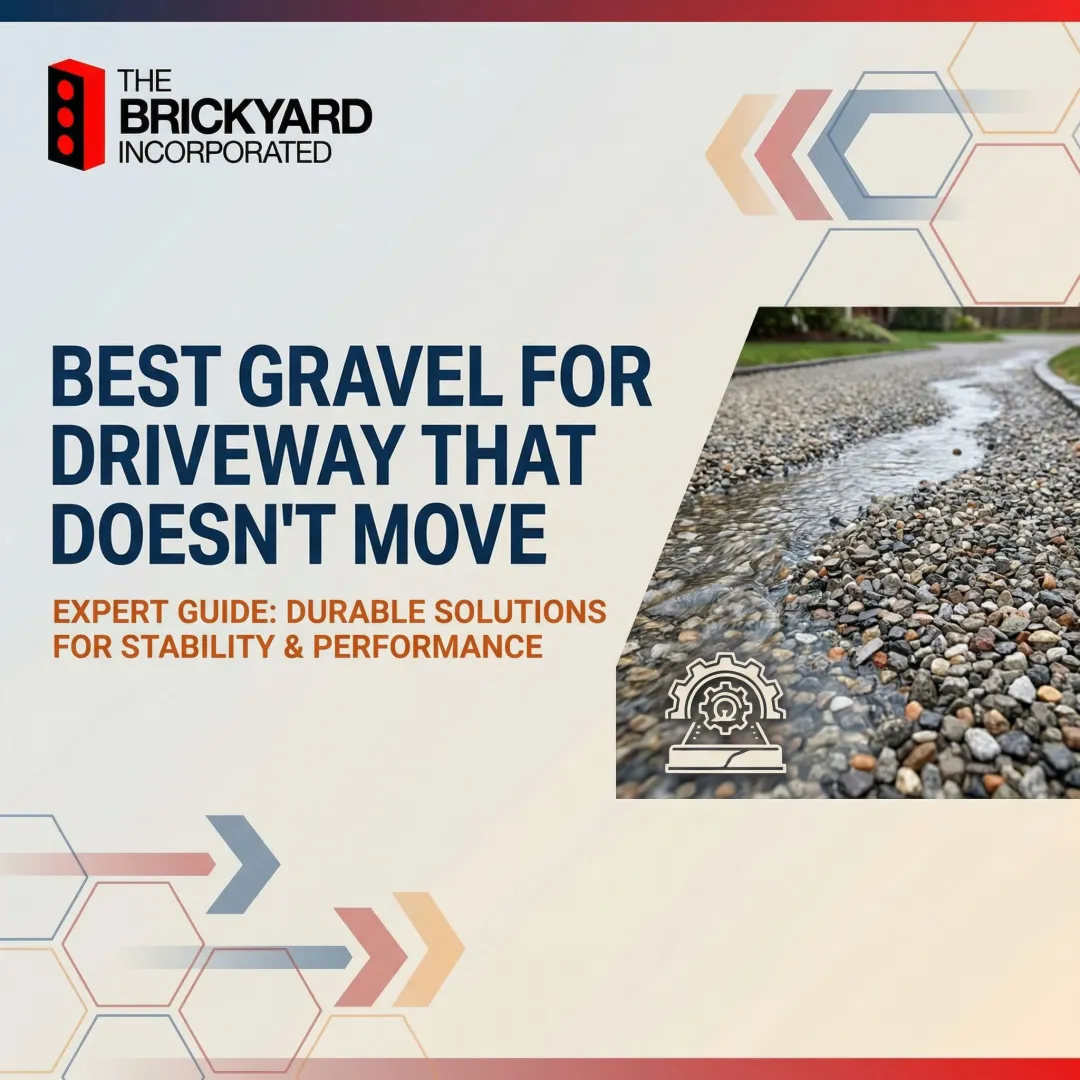
Driveway applications demand materials that withstand vehicle weight and freeze-thaw cycles. Interlocking concrete or clay pavers with proper base installation outperform poured concrete in both longevity and repairability.
Critical requirements:
- Minimum 2 3/8" (60mm) thickness for residential driveways
- 3 1/8" (80mm) thickness for commercial or heavy vehicle applications
- Herringbone laying pattern to resist horizontal braking and turning forces
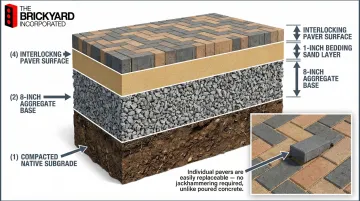
- Minimum 8-inch compacted aggregate base
Unlike rigid concrete slabs that crack from frost heave, interlocking pavers accommodate ground movement through sand-filled joints. If settlement occurs, individual pavers can be removed, the base repaired, and the same units reinstalled. Poured concrete offers no comparable repair option.
Walkways and Pathways
Walkways connect outdoor spaces, improve safety, and define landscape flow. Surface texture for slip resistance matters most in Wisconsin winters.
Design considerations:
- Bordered designs using contrasting paver colors create visual interest
- Minimum 36-inch width for primary walkways
- Gentle curves feel more natural than rigid straight lines
- Lighting integration improves safety and nighttime aesthetics
Reclaimed brick walkways complement historic homes, while clean-cut concrete pavers suit modern architecture. Natural flagstone with wide joints creates informal garden paths.
Retaining Walls
Retaining walls serve critical functional roles: managing slopes, preventing soil erosion, and creating terraced planting areas. Material options include concrete block systems, natural stone, and reclaimed brick.
Engineering considerations:
- Walls function as gravity structures relying on mass to resist soil pressure
- Proper drainage prevents hydrostatic pressure buildup behind walls
- Walls exceeding standard gravity height limits require geogrid reinforcement
- Base preparation and backfill specifications vary by wall height and soil conditions
The Brickyard stocks retaining wall materials for residential and commercial projects, and the sales team can help you work through base specs, wall height limits, and drainage requirements before you order.
How to Choose the Right Pavers for Your Project
The best paver for one project may be wrong for another. Homeowners and contractors benefit from evaluating four key factors before purchasing materials.
Climate and Freeze-Thaw Considerations
Milwaukee experiences approximately 122.7 days per year with minimum temperatures at or below 32°F. This high frequency of freezing causes moisture in soil and pavers to expand and contract, leading to frost heave and potential cracking.
Material selection for cold climates:
- High-density clay pavers rated ASTM C902 Class SX resist freeze-thaw damage
- Concrete pavers must meet ASTM C936 absorption limits (maximum 5%)
- Avoid porous natural stones like travertine and limestone in exposed applications
- Dense granite and bluestone perform well in Wisconsin winters
Proper base installation matters as much as material choice. A minimum 8-inch compacted aggregate base with adequate drainage prevents frost heave regardless of paver type.
Load and Traffic Requirements
Distinguish between pedestrian-only applications and vehicle-load applications when specifying materials:
Pedestrian applications (patios, walkways):
- Minimum 50mm thickness acceptable
- 4-6 inch aggregate base sufficient
- Broader material options including thinner natural stone
Vehicle applications (driveways, parking areas):
- Minimum 60mm thickness required (80mm for commercial)
- 8-12 inch aggregate base mandatory
- Herringbone pattern required to prevent paver creep
- Edge restraint systems critical for structural integrity
Underspecifying thickness or base depth leads to premature failure regardless of material quality.
Aesthetic and Design Goals
Color, texture, shape, and laying pattern shape final appearance:
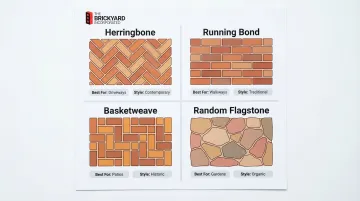
Laying patterns:
- Herringbone: Best structural performance for driveways; adds dynamic visual interest
- Running bond: Simple, linear layout that suits contemporary designs
- Basketweave: Traditional pattern ideal for patios and walkways
- Random flagstone: Organic, relaxed appearance for garden settings
Material and style matching:
- Reclaimed brick and thin brick veneer complement historic and traditional architecture
- Clean-cut concrete pavers suit modern, minimalist designs
- Natural stone bridges traditional and contemporary styles
- Color selection should complement home exterior and existing landscape
Working with an Experienced Supplier
Sourcing materials from a knowledgeable hardscape supplier—rather than a general big-box retailer—provides critical advantages:
- Staff who understand local climate requirements and can steer you toward materials that hold up
- Specialty and reclaimed materials that big-box stores simply don't carry
- Matching capability for additions or repairs to existing hardscapes
- Complementary products in one place: base materials, edge restraints, sealers, and outdoor living elements
- Direct access to reputable manufacturers and curated product lines
The Brickyard has supplied brick, cultured stone, pavers, and retaining walls to Milwaukee homeowners and contractors since the early 1970s. Their staff brings hands-on knowledge of what holds up in Wisconsin winters and what doesn't. With one of the nation's largest stocks of reclaimed brick, they carry options unavailable through typical retail channels.
Hardscape Maintenance Tips to Keep Pavers Looking New
Even the most durable pavers require basic maintenance to preserve appearance and structural integrity. Proper care protects your investment and extends service life.
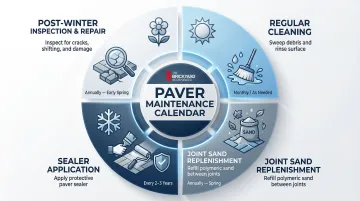
Essential maintenance tasks:
- Regular cleaning — Sweep and rinse pavers monthly to prevent organic debris buildup, which can stain surfaces and promote moss growth
- Joint sand replenishment — Inspect joints annually and replenish sand if it drops more than 1/4 inch below the paver chamfer; consider upgrading to polymeric sand for superior stability
- Sealer application — Concrete pavers benefit from penetrating sealers every 3-5 years to protect against staining and UV fading; clay pavers typically require no sealing
- Weed and moss treatment — Address growth promptly using specialized low-pressure cleaners (30-100 psi); avoid wire brushes that scratch surfaces
When problems do arise, most are straightforward to fix. Common repair scenarios include:
- Individual paver replacement — Remove damaged units, repair the base if needed, and reinstall matching pavers without visible patches. This is one of the key advantages interlocking systems have over poured concrete.
- Efflorescence treatment — White powdery calcium carbonate deposits are common on concrete pavers. Apply a specialized efflorescence cleaner to remove them; the issue is purely cosmetic and doesn't affect structural integrity.
- Post-winter inspection — After harsh Wisconsin winters, check for joint sand loss, paver movement, and settling. Catching these early prevents water from infiltrating the base layer.
- Snow removal — Use rubber or plastic blade edges on snowplows to avoid scratching textured surfaces. Sodium chloride (rock salt) is safe; never use magnesium chloride or ammonium-based deicers, which chemically attack concrete.
The Brickyard stocks the maintenance products you need — masonry sand for joint replenishment, penetrating sealers, and efflorescence cleaners — so your pavers stay looking their best season after season.
Frequently Asked Questions
Who are the top brick paver manufacturers?
Well-known manufacturers include Belgard, Unilock, Pine Hall Brick, and Oldcastle APG, all producing ASTM-compliant products. Choosing a reputable local distributor like The Brickyard ensures access to multiple top brands, specialty materials, and personalized guidance rather than being limited to a single manufacturer's product line.
What is the difference between brick pavers and concrete pavers?
Brick pavers are made from kiln-fired clay with color running through the entire unit, offering superior fade resistance and 100+ year lifespans without sealing. Concrete pavers use cement and aggregate with surface-applied color, providing broader design options at lower upfront cost but requiring periodic sealing to maintain appearance.
How long do brick pavers last?
High-quality clay brick pavers can last 25–100+ years, with historic examples remaining functional for over two centuries. Concrete pavers typically last 20–30 years before major rehabilitation. Longevity depends on base preparation and proper drainage.
Are brick pavers suitable for cold climates like Wisconsin?
Yes—dense, high-quality brick pavers meeting ASTM C902 Class SX standards (maximum 8.0% water absorption) perform exceptionally well in Wisconsin's freeze-thaw cycles. Proper base installation with adequate drainage and regular joint sand maintenance are critical factors for cold-climate performance.
What hardscape projects add the most value to a home?
Patios, front walkways, and driveways consistently offer strong ROI. The National Association of Realtors reports 95% cost recovery on standard concrete paver patios, with homeowner satisfaction scores of 9.9 out of 10—among the highest of any home improvement project.
How do you maintain brick pavers over time?
Clay pavers need little beyond regular sweeping and occasional rinsing. Concrete pavers benefit from joint sand replenishment annually and a penetrating sealer every 3–5 years. Replace cracked or damaged pavers promptly to prevent base erosion.
Ready to start your hardscape project? The Brickyard's team at 3352 S. Clement Ave., Milwaukee, WI knows what works in Wisconsin's climate and can match you with the right materials for your project. Stop in Monday–Friday, 7AM–4PM, or call (414) 481-9600.