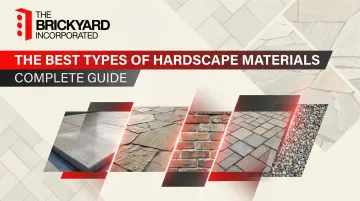
This guide covers the most popular hardscape materials—from brick and natural stone to concrete pavers and gravel—what makes each one unique, and how to pick the right one for your specific project.
TL;DR
- Hardscape refers to non-living structural elements like patios, driveways, walkways, and retaining walls
- Popular materials include brick, concrete pavers, natural stone, poured concrete, gravel, and composite decking
- The best material depends on your budget, application, aesthetic goals, and local climate
- Brick and natural stone last decades with minimal maintenance; gravel is the most budget-friendly option for installation
- In Milwaukee, freeze-thaw resistance and drainage aren't optional — they're the first things to get right
What Is Hardscape?
Hardscape encompasses the hard, non-living elements of a landscape—paved areas, walls, walkways, driveways, steps, and structures—as distinct from softscape (plants, turf, mulch, and other organic elements). The two work together to create balanced outdoor environments that are both functional and visually appealing.
These structural elements serve multiple roles beyond aesthetics. Hardscape manages drainage, routes traffic, controls erosion, and creates definition in outdoor spaces. According to the American Society of Landscape Architects (ASLA), landscape architecture encompasses the design and construction of built environments, including hardscape elements like walls, circulation systems, and pools.
When properly planned, hardscape can dramatically increase property value. The goal is proportion: enough structure to define and organize your yard, with enough open or planted space to keep it feeling livable.
Common hardscape features include:
- Patios and outdoor living spaces
- Driveways and parking areas
- Walkways and garden paths
- Retaining walls and terraces
- Outdoor steps and stairways
- Pool surrounds and decking
- Fire pit areas and outdoor kitchens
- Garden borders and edging
Material selection affects both the look and the cost of these features. ASLA recommends allocating roughly 10% of your home's value to landscaping for maximum ROI, with hardscape alone typically accounting for 20–45% of that outdoor improvement budget.
The Best Types of Hardscape Materials
Hardscape material selection is one of the most important early decisions in any outdoor project—it affects durability, cost, maintenance burden, and overall visual style for decades. The six material types below each cover strengths, limitations, and best-use applications so you can match the right material to your project.
Brick
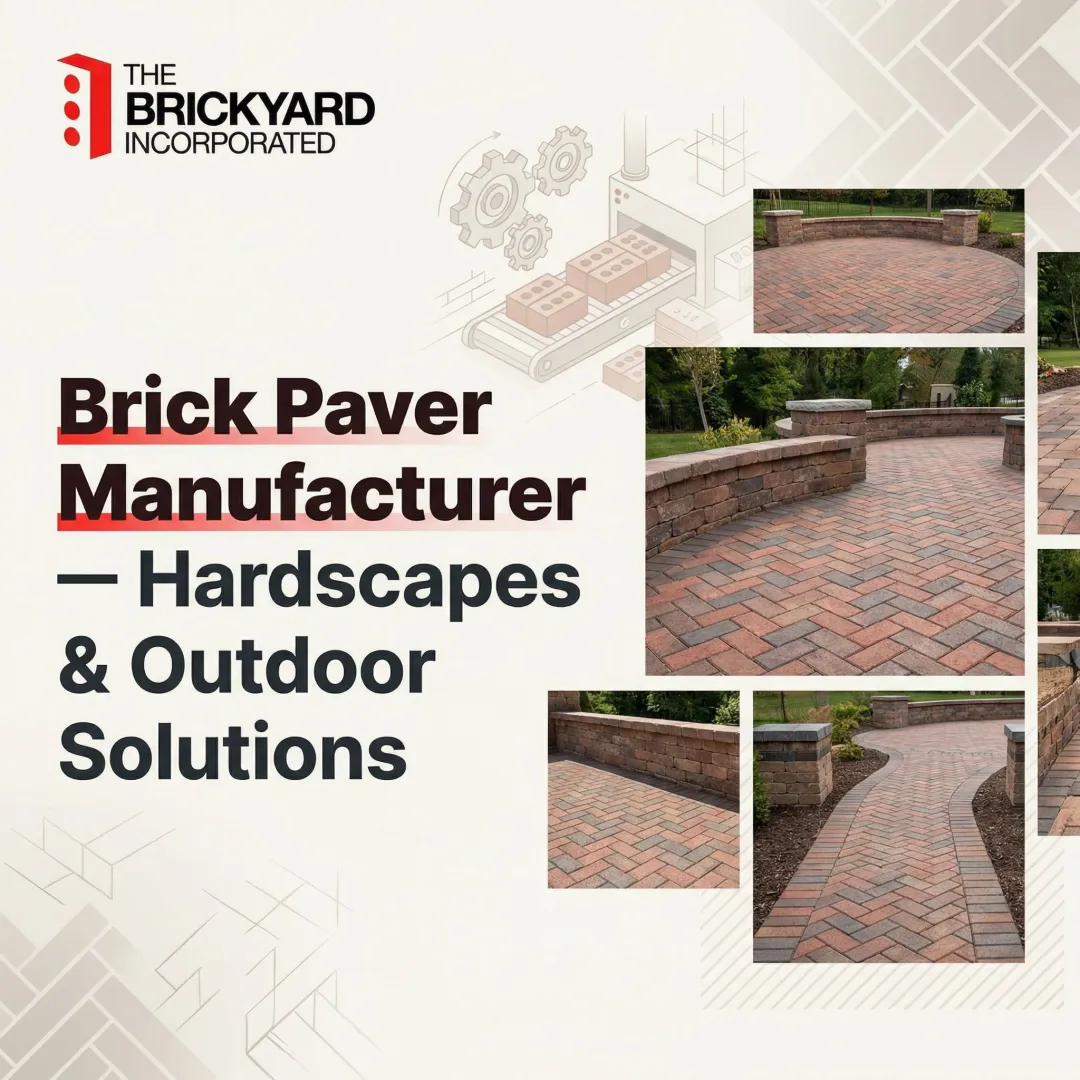
Brick is one of the oldest and most trusted hardscape materials. Made from fired clay and available in a wide range of colors and textures, brick is used in everything from driveways and patios to walkways and garden walls. Reclaimed brick offers a weathered, character-rich aesthetic that new materials can't replicate and represents a sustainable choice that reduces environmental impact.
Durability and Performance:
Properly installed clay brick has a reference service life of 150 years, with the Brick Industry Association noting an average lifespan of 100 years. For outdoor hardscapes in cold climates, ASTM C216 Grade SW (Severe Weathering) is the required standard—these bricks must withstand 50 cycles of freezing and thawing with weight loss not exceeding 0.5%.
Key advantages:
- Highly durable and frost-resistant when properly installed
- Individual units can be replaced without disturbing the entire surface
- Pairs well with traditional and craftsman-style homes
- Reclaimed brick saves 86-88% of environmental impact compared to new brick production
Installation Considerations:
Brick requires a solid base and proper sand or mortar setting to prevent shifting. Proper sub-base preparation is critical for long-term performance in Wisconsin's climate.
The Brickyard carries one of the largest selections of both new and reclaimed brick in the U.S., making it a reliable source for Milwaukee-area homeowners and contractors looking for variety and quality.
Concrete Pavers
Concrete pavers are manufactured units made from compressed concrete, available in an enormous variety of shapes, sizes, colors, and finishes. They're one of the most versatile and widely used hardscape materials today, suitable for patios, driveways, walkways, and pool decks.
Superior Strength:
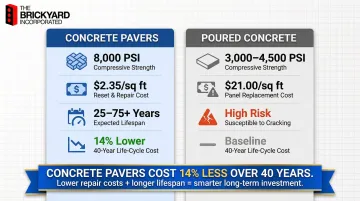
ASTM C936 requires concrete pavers to have a minimum compressive strength of 8,000 psi—double that of typical poured concrete, which ranges from 3,000 to 4,500 psi for residential applications. This higher strength translates to better load-bearing capacity and longer service life.
Key advantages:
- Consistent sizing for easy installation
- Flex slightly with ground movement, reducing cracking compared to poured concrete
- Individual pavers can be lifted and reset if settling occurs
- Resetting pavers costs $2.35/sq ft vs. $21.00/sq ft for concrete panel replacement
- Expected lifespan of 25-75+ years
Style Options:
Common finishes include tumbled, smooth, and textured surfaces that can mimic the look of natural stone or brick at a lower price point. Sealers extend lifespan and color retention by protecting against oil stains, UV fading, and weed growth.
Life-Cycle Cost Advantage:
While concrete has a lower initial installation cost ($8.39/sq ft), pavers have a 14% lower 40-year life-cycle cost ($10.44/sq ft vs. $11.91/sq ft) when maintenance expenses are factored in.
Natural Stone
Natural stone options commonly used in hardscaping include flagstone, bluestone, travertine, limestone, slate, and granite. Each has unique color, texture, and porosity characteristics that affect both appearance and performance.
Natural stone is the premium choice for patios, garden paths, pool surrounds, and accent walls—valued for its authenticity, one-of-a-kind appearance, and an expected lifespan of 50-100+ years when properly maintained.
Porosity and Freeze-Thaw Performance:
Not all natural stones perform equally in cold climates. Granite's ultra-low absorption rate (0.05-0.40%) makes it highly resistant to Wisconsin freeze-thaw cycles. However, porous stones like travertine and certain limestones absorb water and can crack in cold climates if not properly sealed.
Climate-Appropriate Selection:
- Best for cold climates: Granite, dense bluestone, slate
- Requires sealing: Travertine, porous limestone
- Avoid outdoors in Wisconsin: Gray/black limestones with bituminous composition (deteriorate rapidly)
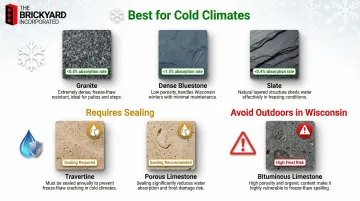
Water absorption is a direct indicator of freeze-thaw susceptibility. Maximum allowable absorption ranges from 0.20% for marble to 12% for low-density limestone per ASTM C97 standards.
Cost Considerations:
Natural stone patio installations typically cost between $15 and $30 per square foot, driven by stone type, patio size, and layout complexity. Irregular flagstone layouts and larger format slabs sit at the higher end of that range.
Poured Concrete
Poured (cast-in-place) concrete is the go-to material for driveways, garage aprons, large patio slabs, and sidewalks—valued for its strength, low initial cost, and design flexibility. It can be stamped, stained, broom-finished, or exposed aggregate for texture and visual interest.
Key Limitations:
Once cracked, concrete is difficult to repair seamlessly and full slab replacement is costly. In Wisconsin's climate, cracking stems from three main causes:
- Freeze-thaw expansion — frozen water expands by 9%, creating internal pressure
- Deicing salt scaling — accelerates surface deterioration over time
- Subgrade settlement — unstable base causes uneven stress across the slab
Critical Installation Requirements:
ACI 302.1R dictates that control joints must be spaced at 24-36 times the slab thickness to manage drying shrinkage and thermal contraction. For a 4-inch slab, joints should be placed every 8-12 feet. Proper sub-base depth (4-6 inches of compacted granular base) and drainage design are essential for cold-climate durability.
Repair Costs:
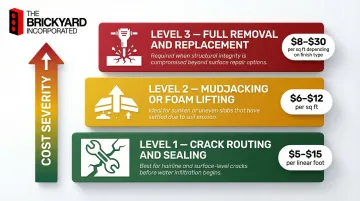
- Crack routing and sealing: $5-15 per linear foot
- Mudjacking/foam lifting: $6-12 per sq ft
- Full removal and replacement: $8-18 per sq ft (standard), $15-30 per sq ft (decorative/stamped)
Gravel and Loose Materials
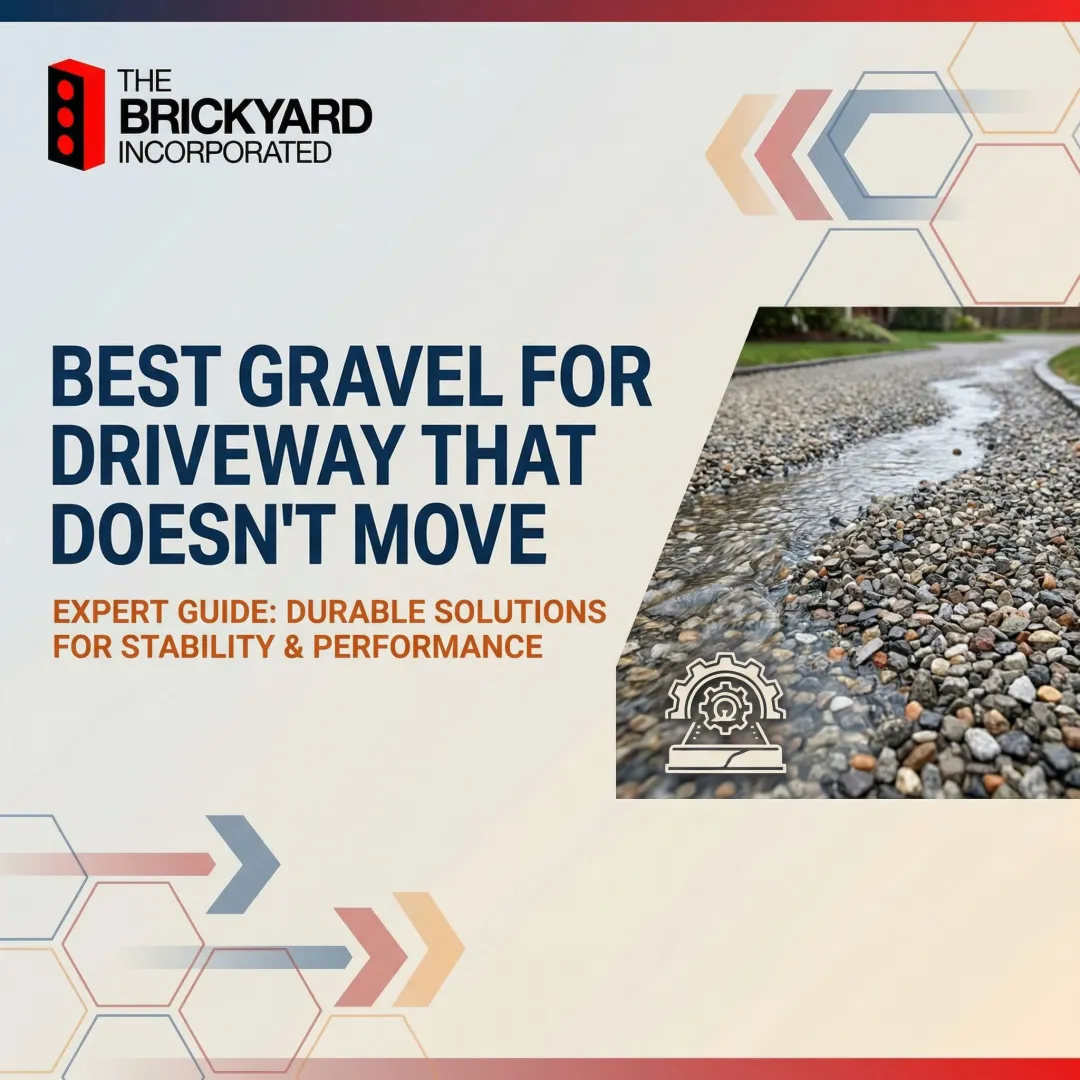
Gravel, crushed stone, and pea gravel are the most budget-friendly hardscape option—commonly used for driveways, garden paths, fire pit surrounds, and drainage areas. Their permeability is a genuine functional advantage: permeable surfaces achieve initial infiltration rates of at least 100 inches per hour and can reduce peak stormwater flow by 80% during a 2-year storm event.
Stormwater Benefits:
In-service infiltration rates stay no lower than 10 inches per hour, well above what most storm events demand.
Milwaukee-Specific Advantages:
The City of Milwaukee Landscape Guide allows 100 sq ft of permeable paving to substitute for one required canopy tree and 100 sq ft of traditional landscaping in commercial applications. The Milwaukee Metropolitan Sewerage District offers up to a 60% stormwater fee reduction for porous pavement installations.
Cost Benchmarks:
Gravel delivery and installation in Milwaukee averages $1.24-1.65 per square foot for a 4-inch layer—far less than any paved alternative.
Limitations:
- Loose materials shift over time and require periodic replenishment
- Not ideal for high-traffic areas or slopes
- Challenging for users with mobility limitations
- Edging or border materials are required to contain them
Wood and Composite Decking
Wood and composite decking are primary materials for raised decks, pergola floors, boardwalks, and pool surrounds. Natural wood (cedar, redwood, pressure-treated pine) offers warmth and aesthetics, while composite decking (made from wood fiber and recycled plastic) offers significantly lower maintenance and better resistance to moisture and rot.
Lifespan Comparison:
- Wood decking: 10-25 years, requires staining or sealing every 1-3 years
- Composite decking: 25-50 years, requires only occasional cleaning
Freeze-Thaw Performance:
Composite decking shows 0% strength loss and minimal stiffness change (-8%) after freeze-thaw cycling at -29°C, making it equivalent to preservative-treated wood for resistance to weathering, fungal decay, and termite attack.
Maintenance Requirements:
Natural wood demands regular upkeep to prevent surface wear, graying, and moisture absorption. In Wisconsin's wet springs and cold winters, composite typically pays for its higher upfront cost within the first decade—especially when you factor in the recurring expense of staining or sealing wood every one to three years.
How to Choose the Right Hardscape Material for Your Project
The single most important starting point is matching the material to the application. A driveway requires materials that can handle vehicle loads (concrete, pavers); a garden path may prioritize aesthetics and permeability (flagstone, gravel); a retaining wall demands structural integrity (concrete block, natural stone, brick).
Budget: Installation Cost vs. Long-Term Value
Don't just evaluate installation cost—factor in long-term maintenance and repair costs. A cheaper material that requires frequent repair or replacement may cost more over 10-20 years than a premium option installed once correctly. Research typical cost-per-square-foot ranges for each material type (installation + materials) and expected lifespan.
Climate and Freeze-Thaw Performance
In Wisconsin and similar cold-weather markets, materials that absorb water and expand during freeze-thaw cycles are at higher risk of cracking. Wisconsin Administrative Code mandates footings be placed at least 48 inches below grade to account for frost penetration. For pavements, ICPI recommends minimum aggregate base thickness of 4 inches for pedestrian areas, 6 inches for residential driveways, and 8 inches for parking lots in well-drained soils.
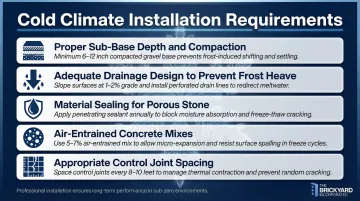
Key requirements for cold climates:
- Proper sub-base depth and compaction
- Adequate drainage design to prevent frost heave
- Material sealing for porous stone types
- Air-entrained concrete mixes
- Appropriate control joint spacing
How Aesthetics and Home Style Should Guide Your Choice
Hardscape materials should complement your home's architectural style and surrounding landscape. Brick and cobblestone suit traditional/craftsman styles; clean-line concrete pavers or large-format flagstone suit modern/contemporary designs; reclaimed stone or wood fits rustic/farmhouse aesthetics.
Mixing two complementary materials—such as a paver field with a natural stone border—produces more visually interesting results than a single material throughout. Once the aesthetic direction is clear, sustainability is worth factoring into your final material choice.
Sustainability Considerations
Reclaimed brick and stone reduce landfill waste and carry a documented history tied to original structures. Permeable pavers and gravel reduce stormwater runoff and can qualify for municipal credits. The Brickyard has been sourcing reclaimed brick and stone since the early 1970s and maintains one of the largest reclaimed inventories in the U.S.—a practical option for Milwaukee-area projects with sustainability goals.
Conclusion
Hardscape material choice is a long-term decision that affects the safety, functionality, and appearance of an outdoor space for decades. The best choice depends on the specific application, budget, climate demands, and aesthetic goals unique to each project.
Before purchasing materials for larger projects, consult with a knowledgeable supplier who understands regional climate challenges and can guide you toward durable, appropriate solutions. Milwaukee-area homeowners and contractors can reach out to The Brickyard for expert guidance and quality product sourcing. With over four decades of experience and one of the widest selections of brick, pavers, natural stone, and hardscape materials in the region, The Brickyard's team helps you find the right material for the job.
Contact The Brickyard:
- Location: 3352 S. Clement Ave., Milwaukee, WI 53207
- Phone: (414) 481-9600
- Hours: Monday-Friday, 7AM-4PM
Frequently Asked Questions
What is hardscape and softscape?
Hardscape refers to the hard, non-living structural elements of a landscape—paving, walls, paths, and driveways. Softscape refers to the living, horticultural elements like plants, grass, trees, and mulch. A well-designed outdoor space balances both.
What is the cheapest hardscape option?
Gravel and crushed stone are typically the lowest-cost hardscape materials per square foot, followed by poured concrete. While upfront costs are low, factor in ongoing replenishment costs (gravel) or repair costs (concrete) when budgeting long-term.
What hardscape material lasts the longest?
Natural stone and brick are among the most durable hardscape materials, with lifespans of 50-100+ years when properly installed and maintained. Concrete pavers also offer excellent longevity with the added advantage of easy individual unit replacement.
What is the rule of 3 in landscaping?
The rule of 3 is a design principle suggesting that groupings of three elements (plants, stones, features) create more visually balanced and natural-looking compositions than even-numbered groupings. It applies to both softscape planting and hardscape accent arrangements.
Is $100 an hour too much for landscape work?
Hardscape labor typically runs $50-150/hour depending on region, project complexity, and contractor experience. Natural stone installation, retaining walls, and drainage work sit at the higher end because of the skill and equipment involved.
Do I need a permit for hardscape installation?
Permit requirements vary by municipality. In Milwaukee, retaining walls over 3 feet high or those supporting more than 32 inches of unbalanced fill require permits and professional engineering design. Large impervious surface additions and projects affecting drainage often require permits as well — confirm with your local building department before starting.