Introduction
Concrete patios now appear in over 63% of new single-family homes—and for good reason. With the right finishes and hardscape accents, a basic slab can become the most-used space on your property.
Most homeowners struggle to visualize what's possible beyond plain gray concrete. The design options, however, are far wider and more affordable than the material's utilitarian reputation suggests.
According to the National Association of Home Builders, patios now appear in over 63% of new single-family homes, and poured concrete accounts for more than 60% of those installations. This popularity stems from concrete's unmatched durability, design versatility, and cost-effectiveness—especially in climates with harsh winters like Wisconsin's.
This guide covers everything you need to know: popular concrete finishes, creative design strategies, complementary hardscape accents, and practical planning tips for both new patios and makeovers of existing slabs.
TLDR
- Concrete offers unmatched durability and versatility at a lower cost than pavers
- Finishes like stamped, stained, and exposed aggregate turn plain slabs into decorative, custom-look surfaces
- Strategic lighting, zoning, and furniture placement define distinct activity zones that feel like extensions of your home
- Fire pits, paver borders, and seat walls add function and visual interest
- Stain, overlay, or paver installation can refresh an existing slab without full replacement
Why Concrete Is a Winning Choice for Your Patio
Concrete remains one of the most popular patio materials for good reason. A properly poured and sealed concrete patio can last 25 to 50 years with minimal upkeep, making it one of the most cost-effective long-term investments in your outdoor space.
Versatility That Adapts to Any Home Style
Unlike wood decking or pavers alone, poured concrete can be shaped into nearly any footprint—curved edges, multi-level platforms, or custom L-shaped layouts that wrap around your home's architecture. It accepts a wide variety of finishes and colors, allowing you to match everything from modern minimalist aesthetics to rustic farmhouse charm.
Built to Survive Midwest Winters
For homeowners in Wisconsin and similar cold-weather regions, concrete's performance in freeze-thaw cycles is critical. When properly engineered with air-entrained concrete (6% air content) and a water-to-cement ratio of 0.45 or less, concrete resists the expansion damage that occurs when absorbed moisture freezes.
The American Concrete Institute requires a minimum compressive strength of 4500 PSI for concrete in "very severe" freeze-thaw zones, significantly higher than the 3000 PSI standard used in milder climates.
A patio built to these specifications, sealed regularly, and protected from deicing salts during its first winter will outlast most other patio materials while requiring far less maintenance than wood or composite decking.
Popular Concrete Patio Styles and Finishes
The finish you choose determines not just the look of your patio, but also its texture, slip resistance, and maintenance requirements. Here are the most popular options, each with distinct advantages.
Stamped Concrete
Stamped concrete uses flexible polyurethane molds pressed into wet concrete to replicate the appearance of natural materials at a fraction of the cost. Popular patterns include:
- Ashlar slate - Rectangular stones in a semi-irregular pattern
- Cobblestone - Rounded stones for a European courtyard look
- Wood plank - Realistic wood grain without the rot or splinters
Stamped concrete typically costs $15 to $30 per square foot installed, landing between basic concrete and natural stone pavers in price. You also avoid the weed growth in joints and individual paver shifting that come with loose-laid stone.
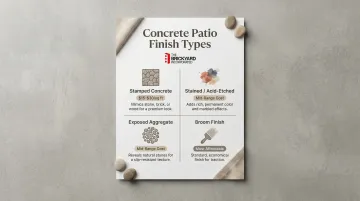
Stained and Acid-Etched Concrete
Concrete stains penetrate the surface rather than sitting on top like paint, which means they won't peel or chip over time. The two main types work quite differently:
- Acid stains chemically react with the concrete's calcium hydroxide to create permanent, variegated tones in earthy browns, tans, soft greens, and terra cottas. The unpredictable mottling adds organic character.
- Water-based stains use acrylic polymers and pigments for more uniform, predictable color. They cover a broader palette—blacks, whites, and metallics—making them ideal for precise color matching.
Both types are UV-stable and built for outdoor use.
Exposed Aggregate
This finish reveals the natural stones, pebbles, or decorative glass embedded in the concrete mix. Contractors apply a surface retarder to fresh concrete, then wash away the top cement paste layer to expose the aggregate beneath.
The result is a textured, visually interesting surface with excellent slip resistance—ideal for pool surrounds, sloped patios, or any area where wet-weather traction matters. Exposed aggregate is highly weather-resistant and hides minor surface wear better than smooth finishes.
Brushed or Broom Finish
The most common and cost-effective option, a broom finish is created by dragging a stiff brush across fresh concrete. The fine ridges reduce slipping while maintaining a clean, simple appearance. This practical baseline finish can later be enhanced with concrete stain or paint, making it a smart choice if you want to defer aesthetic upgrades while staying within budget.
A Word on Epoxy and Polyaspartic Coatings
Standard epoxy coatings—popular for garage floors—are not suitable for outdoor patios. They yellow, fade, and become brittle under UV exposure. If you want a glossy, decorative coating for your patio, specify 100% UV-stable polyaspartic or polyurea products instead. These cure quickly, remain flexible, and won't degrade in sunlight.
Design Ideas to Elevate Your Concrete Patio
The right patio design turns a slab of concrete into a space you genuinely want to spend time in—one that feels like a natural extension of your home rather than an afterthought.
Break Away from the Standard Rectangle
A simple square slab feels utilitarian. Curved edges, angled corners, or an L-shaped footprint that wraps around the side of your home create a more intentional, architecturally interesting space. Consider how the patio shape relates to your home's roofline, windows, and door placements. The goal is visual continuity between indoor and outdoor spaces.
Create Functional Zones
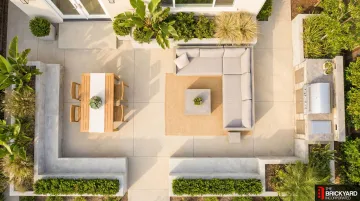
Larger patios benefit from defined zones—a dining area near the house, a lounge area with comfortable seating, and perhaps a cooking zone with a built-in grill. You don't need walls to create separation. Use these visual dividers:
- Outdoor rugs to anchor furniture groupings
- Planters or low seat walls to suggest boundaries
- Changes in surface texture or color (stamped vs. smooth)
- Furniture arrangement itself
This approach transforms a single slab into multiple outdoor rooms, each with its own purpose.
Layer in Lighting for Ambiance and Safety
According to the 2024 U.S. Houzz Outdoor Trends Study, 78% of homeowners who upgrade their outdoor spaces install new lighting. The most popular choices are landscape lighting (81%), string or bistro lights (44%), and porch sconces (37%).
Lighting dramatically extends how long and how comfortably you can use your patio after dark. Consider:
- String lights overhead for soft, ambient glow
- In-ground step lights along patio borders for safety
- Path lighting that guides guests from the house to seating areas
- Smart-enabled fixtures (26% of new outdoor lighting) for mobile control
Soften Hardscape with Greenery
Container gardens, raised planters built into the patio edge, and climbing plants on adjacent trellises add seasonal color and soften the visual hardness of concrete. Planters don't compromise the slab itself, and they can be rearranged as your design preferences evolve. Once the greenery is in place, furniture becomes the next layer that pulls the whole space together.
Let Furniture Define the Style
Your furniture selection sets the tone for the entire space. Modern minimalist metal frames suit a sleek, contemporary finish, while rustic wood or wicker works well with exposed aggregate or textured concrete. Tropical rattan and bold cushions capture a resort feel. Whatever direction you go, coordinate your furniture with the concrete finish so the two elements reinforce each other rather than compete.
Complementing Your Patio with Hardscape Accents
A concrete patio rarely stands alone in a well-designed backyard. Surrounding hardscape elements tie the space to the rest of your landscape and add visual definition.
Mix Materials for Texture and Interest
Combining concrete with other materials—paver borders, natural stone pathways, or brick edging—adds layers of texture and breaks up the visual monotony of a large slab. For example, a poured concrete center surrounded by a two-foot border of tumbled pavers creates a framed, finished appearance.
When planning your material selections, visit a local hardscape supplier like The Brickyard in Milwaukee, which stocks pavers, natural stone, and masonry products across a wide range of styles and price points. Seeing materials side by side before finalizing a design makes it easier to match colors and textures.
Fire Pits and Outdoor Fireplaces
Adding a fire feature transforms your patio into a true four-season outdoor living space. Options range from freestanding portable fire pits to built-in gas burner features surrounded by natural stone or brick. When planning placement, account for:
- Airflow and smoke direction
- Seating clearance (at least 3 feet from the fire edge)
- Proximity to structures and overhangs
- Local fire codes and regulations
Coordinating your fire feature with the stone or brick used elsewhere on your patio creates a cohesive look that feels intentional rather than assembled.
Outdoor Kitchens and Grilling Stations
Anchoring a corner of your patio with an outdoor kitchen—even a simple built-in grill station with a stone or brick surround—increases both the entertainment value and resale appeal of your home. According to the National Association of Home Builders, 68% of design professionals are now incorporating outdoor kitchens into residential projects.
Material selection matters. A grill surround built from the same brick or stone used elsewhere in your landscape creates visual continuity and a polished, professional appearance.
Retaining Walls and Seat Walls
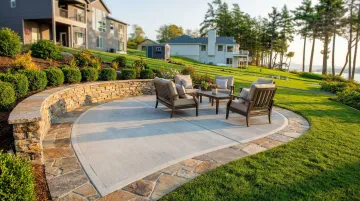
On sloped properties, retaining walls define the patio edge while managing grade changes. Seat walls—typically 18 inches high—double as functional seating and architectural definition. Common material choices include:
- Natural stone for an organic, textured look
- Brick for a classic, structured appearance
- Concrete block for clean lines and modern profiles
Sourcing wall materials from the same supplier you used for your patio and pathways keeps the color palette consistent across the entire outdoor space.
Makeover Ideas for an Existing Concrete Patio
If you have an existing slab in decent structural condition, you don't necessarily need to tear it out. Several makeover options can dramatically improve the appearance and function of a weathered patio.
Stain-and-Seal Refresh
One of the simplest approaches: thoroughly clean the slab, apply a coat of concrete stain (acid-based or water-based), and finish with a quality concrete sealer. This weekend project costs a fraction of replacement and can transform a discolored, dull surface into a clean, polished finish with real visual impact.
Overlay with Decorative Concrete Resurfacer
A polymer-modified cementitious overlay can be applied over an existing slab to create a fresh surface that accepts stamping, staining, or decorative scoring. Overlays typically cost $3 to $10 per square foot—far less than the $10 to $15+ per square foot required for full demolition and replacement.
That said, overlays only work on structurally sound slabs. Good candidates have:
- Minor discoloration or surface spalling
- Hairline cracks less than 1/8-inch wide
Overlays won't fix soil settlement, active heaving, or widespread cracking — those require a different approach.
Install Pavers or Tile Over the Slab
An existing concrete slab can serve as a stable base for pavers or outdoor tile. This approach adds the aesthetic appeal of individual pavers without the cost and labor of excavation and base preparation. Proper installation requires a bonding layer and careful attention to drainage.
When Full Replacement Is Necessary
Some slabs are beyond surface-level fixes. Consider full replacement if your patio has:
- Cracks wider than 1/8 inch across multiple areas
- Heaving or differential settlement that creates trip hazards
- Active crumbling from freeze-thaw cycles
In these cases, replacement is the safer long-term solution — patching or overlaying will only delay the inevitable.
Tips for Planning Your Concrete Patio Project
Proper planning ensures your patio meets your needs, fits your budget, and lasts for decades.
Size It Appropriately
General guidance suggests allocating 25 to 30 square feet per person for outdoor gathering spaces. For dining areas, the "golden rule" is to leave a minimum of 36 inches of clear space on all sides of the table—enough room for guests to pull out chairs and for others to circulate comfortably behind them.
Map out furniture arrangements before finalizing dimensions. Physically mark the proposed patio footprint with stakes and string, then place your furniture to ensure the space feels comfortable, not cramped.
Climate and Site Considerations for Cold Regions
In Wisconsin and similar climates, proper subbase preparation, adequate concrete thickness, and regular control joints are essential for long-lasting results.
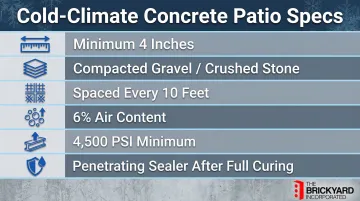
Key specifications:
- Minimum 4-inch thickness for residential patios
- Well-compacted gravel or crushed stone subbase to prevent frost heave
- Control joints spaced 10 feet apart for a 4-inch slab (24 to 36 times slab thickness)
- 6% air entrainment to resist freeze-thaw damage
- Minimum 4,500 PSI compressive strength for severe freeze-thaw zones
- Penetrating sealer applied after curing, reapplied periodically
Avoid applying salt or deicers during the patio's first winter, as these can damage the surface before it's fully cured.
Plan Material Selections Holistically
Choose your concrete finish, border materials, and accent hardscape together rather than piecemeal. Selecting elements as a cohesive set ensures color and texture compatibility — and prevents the disjointed look that comes from adding pieces over time.
When shopping, look for a supplier that stocks pavers, natural stone, masonry products, and outdoor living features together. The Brickyard carries all of these under one roof, so you can compare materials side-by-side and see how they'll work together before committing to a design.
Frequently Asked Questions
How much should a 20x20 concrete patio cost?
A standard 20x20 foot (400 sq ft) poured concrete patio typically costs $2,400 to $6,400, with a national average of $3,549. This includes materials, labor, basic finishing, and permits. Extensive grading, stamped finishes, or integrated features will increase the cost.
Are concrete patios a good idea?
Yes. Concrete is durable, low-maintenance, and highly versatile, adapting to nearly any design style. With proper installation and sealing, a concrete patio can last 25 to 50 years, making it one of the most cost-effective outdoor living investments.
Is pouring a concrete patio cheaper than pavers?
Poured concrete typically costs $4 to $15 per square foot, while pavers range from $6 to $30 per square foot. Concrete has a lower upfront cost, but pavers are easier to repair individually — a worthwhile tradeoff if longevity and repairability are priorities.
What type of concrete is used for a patio?
In cold climates like Wisconsin, fiber-reinforced or air-entrained concrete with a minimum 4,500 PSI compressive strength is the standard choice — it resists freeze-thaw cracking better than basic mixes. Milder climates can use standard ready-mix at 3,500–4,000 PSI for exterior flatwork.
How do I make my concrete patio look better without replacing it?
Apply concrete stain or epoxy coating, add a paver border, install outdoor lighting, and choose stylish furniture. Most of these upgrades run $500–$2,000 total — a fraction of full replacement costs.
How long does a concrete patio last?
A well-poured and maintained concrete patio typically lasts 25 to 50 years. Longevity depends on proper installation, regular sealing, and climate-appropriate maintenance practices such as avoiding deicing salts during the first winter.