
Introduction
A well-designed yard does more than look good—it can add up to 15% to a home's value compared to similar homes on the same street, according to the American Society of Landscape Architects (ASLA). Whether you're planning a front yard refresh or a full backyard transformation, the right mix of plants, pathways, and hardscape features creates spaces that are both beautiful and functional year-round.
This guide covers 50 landscaping ideas organized into front yard curb appeal, backyard outdoor rooms, hardscape features, and garden plantings—plus actionable design principles that help you bring your vision to life, including Wisconsin's freeze-thaw climate cycles.
TL;DR
- Balance softscape (plants, grass, flowers) with hardscape (pavers, walls, patios) for cohesive design
- Front yards benefit from defined borders, layered plantings, and focal points that boost curb appeal
- Turn backyards into functional outdoor rooms using fire features, pathways, and privacy plantings
- Hardscape materials like pavers and natural stone anchor designs and withstand freeze-thaw cycles
- Layering, the rule of 3, and defined focal points are time-tested principles that elevate any yard
Why Outdoor Landscaping Is Worth the Investment
Landscaping isn't just about aesthetics. According to the National Association of Realtors' 2023 Remodeling Impact Report, landscape maintenance projects recover 104% of their cost at resale, while new patios recover 95%. Beyond dollars, homeowners report Joy Scores of 9.7 to 10 for outdoor upgrades—near-perfect scores that speak for themselves.
Softscape vs. Hardscape: Finding the Balance
Every well-designed landscape combines two distinct categories of elements. Understanding both helps you plan a yard that's as functional as it is attractive.
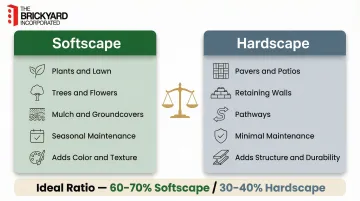
| Softscape | Hardscape | |
|---|---|---|
| What it includes | Plants, lawn, trees, mulch, flowers | Pavers, retaining walls, patios, pathways |
| What it contributes | Color, texture, seasonal interest | Structure, erosion control, durable surfaces |
| Maintenance | Seasonal (watering, pruning, replanting) | Minimal once installed |
The two categories work together — softscape fills hardscape with life, and hardscape gives softscape a framework to grow around. In Midwest climates like southeastern Wisconsin (Zones 5a–5b), that pairing also needs to account for freeze-thaw cycles: cold-hardy plants and dimensionally stable materials like concrete pavers or natural stone hold up through harsh winters far better than materials that shift or crack under repeated frost.
Front Yard Landscaping Ideas
Curb Appeal Starts at the Street
Your front yard is the first thing people see — and a few well-chosen hardscape and planting choices can transform it from forgettable to genuinely inviting.
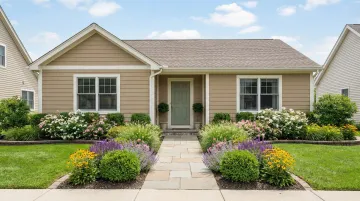
1. Defined Stone or Brick Border Along Lawn Edge
Crisp edging between lawn and beds instantly polishes your yard. Stone or brick borders prevent grass creep and create clean lines — one of the most cost-effective improvements you can make.
2. Welcoming Walkway Using Pavers or Natural Stone
A well-designed front walkway guides visitors to your door. Pavers in running bond or herringbone patterns add visual interest, while natural flagstone offers an organic, cottage-style feel.
3. Layered Foundation Plantings
Plant tall shrubs at the back, mid-height perennials in the middle, and low ground cover in front. This creates depth and frames your home's architecture without competing with it.
4. Statement Entry with Symmetrical Planters
Flank your front door with matching planters filled with evergreens or seasonal flowers. Symmetry creates a formal, welcoming entrance that draws the eye.
Use Your Front Yard to Express Style
5. Cottage-Style Garden with Flowing Flower Borders
Soft, billowing perennials like coneflowers and black-eyed Susans create an informal, romantic look. Perfect for craftsman bungalows and traditional homes.
6. Clean Modern Look with Geometric Beds and Ornamental Grasses
Structured planting beds with repeating ornamental grasses (Calamagrostis 'Karl Foerster') and minimal color palettes suit contemporary architecture.
7. Structured Front Garden with Boxwood Hedges and Focal Tree
Low boxwood hedges define beds, while a specimen tree (redbud, dogwood, or ornamental cherry) anchors the design with seasonal blooms.
8. Low-Maintenance Landscape Using Native Plants and River Rock Mulch
Native perennials like purple coneflower (Echinacea purpurea) and black-eyed Susan (Rudbeckia fulgida) thrive with minimal care. River rock mulch reduces weeding and lasts for years.
Create Visual Depth with Trees and Height
9. Flowering Tree as Front Yard Focal Point
A redbud, dogwood, or ornamental cherry provides spring blooms, fall color, and year-round structure. Position it off-center for a natural, balanced look.
10. Tall Privacy Shrubs Along Property Line
Arborvitae (Thuja occidentalis) or tall spirea create natural screens that define boundaries without fences.
11. Tiered Planting Bed Against Foundation
Use retaining walls or terraced beds to add dimension to flat yards. Layer plants by height for maximum visual impact.
12. Window Boxes or Container Planters
Renters or homeowners with small spaces can add color and charm with seasonal containers. Rotate plantings for spring bulbs, summer annuals, and fall mums.
Design Tip: The materials you use for borders, walkways, and edging do as much visual work as the plants. Matching your paver or stone color to your home's exterior — brick, siding, or trim — ties the whole design together and makes your yard feel intentional rather than assembled.
Backyard Landscaping Ideas
Design the Backyard as a Series of "Outdoor Rooms"
13. Patio Dining Area with Pavers or Flagstone
A 12x16-foot paver patio fits a table and four chairs comfortably. Interlocking pavers are worth the extra step in Midwest climates — they flex with freeze-thaw cycles instead of cracking like poured concrete.
14. Lounge Zone Around a Fire Pit
Built-in seating walls around a stone fire pit pull double duty: they define the space and let you drop the chair count. A well-placed fire pit can push your outdoor season from mid-March through November.
15. Dedicated Lawn Area for Games and Kids
Keep one zone open for play. Define edges with low plantings or decorative borders to separate active space from garden beds.
16. Kitchen Garden with Raised Beds
Grow vegetables and herbs in raised beds near the house. Accessible paths between beds make maintenance easy.
17. Shaded Reading Nook Under a Pergola or Shade Tree
Add a bench or hammock beneath a pergola draped with climbing vines, or tuck seating under a mature tree for a no-cost canopy.
Water Features Add Tranquility
18. Small Pond with Lush Plantings Around the Edge
Ferns, hostas, and ornamental grasses along the edge blur the line between water and garden — and most thrive in the partial shade a pond berm creates.
19. Tiered Waterfall Built into a Sloped Yard
Use natural stone to build cascading waterfalls that turn slope challenges into stunning features.
20. Bubbling Fountain as a Garden Focal Point
A standalone fountain delivers the sound and movement of water with a fraction of the upkeep — no fish, no liner repairs, no aquatic plants to manage.
21. Naturalistic Stream that Doubles as Drainage
Channel rainwater through a rock-lined stream bed that handles hillside drainage while adding visual interest.
Solutions for Tricky Terrain
22. Terraced Retaining Walls to Level a Sloped Backyard
Segmental retaining walls (SRWs) create flat planting terraces on slopes. In Wisconsin's freeze-thaw climate, proper base preparation — compacted gravel at minimum 12 inches deep — is what separates walls that last decades from ones that shift after the first hard winter.
23. Amphitheater-Style Tiered Seating Using Stacked Stone
Turn a slope into built-in seating for outdoor gatherings. Stack natural stone or use SRW units with bench caps.
24. Hillside Covered in Groundcover or Ornamental Grasses
Prevent erosion with low-growing groundcovers or deep-rooted ornamental grasses that hold soil and add texture.
25. Sloped Yard Turned into a Layered Garden with Steps
Build stone or brick steps between planting levels. Each terrace becomes a mini garden room.
Lighting Transforms the Backyard After Dark
26. Low-Voltage Path Lighting to Define Walkways
Low-voltage (12V) LED path lights improve safety and highlight walkways without harsh glare.
27. String Lights Overhead for Ambiance
Drape string lights across patios or between trees to create a warm, inviting glow for evening entertaining.
28. Uplighting on Specimen Trees or Walls
Position uplights at the base of trees or architectural features to add drama and depth.
29. Step Lighting Built into Retaining Walls or Hardscape Edges
Integrate LED step lights into retaining walls or patio edges for safety and subtle nighttime beauty.
Privacy and Enclosure
30. Tall Arborvitae or Hedges Along Property Line
Evergreen hedges provide year-round screening from neighbors and street noise.
31. Pergola or Pavilion that Creates a "Ceiling"
A pergola defines outdoor living space and supports climbing vines for added shade and privacy.
32. Lattice or Fence Softened with Climbing Vines
Install lattice panels or wood fencing, then plant clematis, honeysuckle, or climbing roses for blooms from June through frost.
Hardscaping & Outdoor Living Features
The Patio is the Backbone of Any Backyard
A well-planned patio anchors the entire outdoor space — it's where every other element connects.
33. Classic Brick Paver Patio in Running Bond or Herringbone PatternBrick pavers hold up well through freeze-thaw cycles and age gracefully over time. Herringbone patterns interlock tightly, making them especially stable under heavy foot traffic.
34. Natural Stone Flagstone Terrace with Ground Cover Between JointsFlagstone's irregular edges give patios an organic, relaxed character. Fill joints with creeping thyme or moss — both tolerate foot traffic and fill in quickly.
35. Contemporary Large-Format Concrete Paver PatioLarge-format pavers (24×24 inches or bigger) create a sleek, modern look. Fewer joint lines mean less maintenance and a cleaner surface overall.
36. Multi-Level Patio that Separates Dining from Lounging AreasStep down from a dining terrace to a lower lounge area — grade changes define separate zones without needing walls or fencing.
Material Selection Note: In Midwest winters, interlocking concrete pavers and natural stone outperform poured concrete, which cracks under freeze-thaw cycles. The Brickyard at 3352 S. Clement Ave. in Milwaukee stocks all three material types, and their team can help you match the right option to your climate conditions and project scope.
Fire Features Create a Gathering Centerpiece
Fire features transform a patio from a place to sit into a reason to stay outside.
37. Circular Stone Fire Pit Surrounded by Seating WallsStack natural stone or use SRW units to build a circular fire pit with integrated seating. According to the NAR 2023 Remodeling Impact Report, fire features recover 56% of cost at resale and earn a 9.7 Joy Score.
38. Built-In Gas Fire Pit with Poured Concrete or Stone SurroundGas burners eliminate wood smoke, ash cleanup, and the need to store firewood. Surround with stone or poured concrete for a polished finish.
39. Outdoor Fireplace with Stone or Brick MantelA full outdoor fireplace becomes a dramatic focal point — and it extends your outdoor season well into fall evenings when a fire pit alone wouldn't be enough.
40. Portable Fire Bowl for Smaller PatiosMetal or ceramic fire bowls offer real flexibility. Reposition them for different gatherings and store them indoors once the season ends.
Retaining Walls Do Double Duty as Beauty and Function
On sloped lots, retaining walls unlock usable flat space — and they can look intentional rather than utilitarian.
41. Natural Stone Retaining Wall that Creates a Garden TerraceDry-stacked natural stone walls hold soil on slopes while adding rustic texture to the landscape. Plant trailing flowers or creeping sedum along the top edge to soften the transition.
42. Brick Retaining Wall with Built-In Bench CapTop retaining walls with flat cap stones to create built-in seating — it's one of the most efficient uses of wall height in a small backyard.
43. Stacked Stone Wall as Decorative Garden BorderLow stacked stone walls (12–18 inches tall) define planting beds and add vertical texture without blocking sightlines across the yard.
44. Retaining Wall System that Controls Slope ErosionSRW systems with proper drainage prevent erosion and create usable flat space. In freeze-thaw climates, install a 12-inch gravel column behind walls to prevent hydrostatic pressure buildup.
Pathways Connect Zones and Guide the Eye
A good path does more than move people from point A to point B — it shapes how the entire garden feels to walk through.
45. Winding Flagstone Path Through a GardenIrregular flagstone pieces set slightly apart create a relaxed, meandering path that slows the pace and draws attention to surrounding plantings.
46. Straight Brick Walkway Leading from Driveway to Front DoorA formal brick path in running bond or basket weave provides a direct, welcoming entry. Both patterns stay stable underfoot and complement traditional home styles.
47. Decomposed Granite or Pea Gravel Path Through Casual GardenLoose stone paths drain well and suit informal cottage or native gardens. Edge with metal or stone borders to keep material from migrating into planting beds.
Outdoor Kitchens and Structures Elevate Entertaining
These larger investments pull together the full potential of an outdoor living space.
48. Built-In Outdoor Kitchen with Stone Countertops and Masonry Grill SurroundA full outdoor cooking zone with stone counters, built-in grill, and cabinet storage adds function that a freestanding grill simply can't match. Use exterior materials that echo your home's facade for a cohesive look.
49. Pergola or Shade Structure Over Dining AreaA pergola adds partial shade and architectural definition without fully enclosing the space. Train climbing vines overhead over a season or two for natural coverage and privacy.
50. Freestanding Garden Shed Designed to Match Home's ExteriorUse matching brick, stone, or siding on sheds and outbuildings to create visual unity across your property. A well-matched shed reads as a planned feature — not an afterthought.
Garden, Greenery & Softscape Ideas
Softscaping — plants, mulch, and ground covers — gives a landscape its color, texture, and life. These ideas work across Milwaukee-area yards in Zones 5a–5b.
Layered Planting Creates Depth and Year-Round Interest
Vertical layering mimics natural ecosystems and supports wildlife:
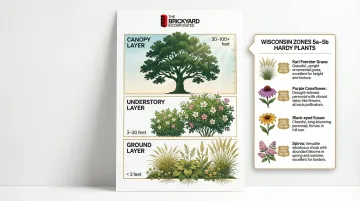
- Canopy layer: Mature trees (30-100+ feet) provide shade and structure
- Understory layer: Smaller flowering trees and large shrubs (3-30 feet)
- Herbaceous/ground layer: Perennials, grasses, and groundcovers (under 3 feet)
Cold-Hardy Plant Examples for Wisconsin (Zones 5a-5b):
- Ornamental grasses: Calamagrostis 'Karl Foerster' (Zones 3-9)—erect clumps with golden tan winter color
- Coneflower: Echinacea purpurea (Zones 3-9)—drought-tolerant once established, vibrant summer blooms
- Black-eyed Susan: Rudbeckia fulgida 'Goldsturm' (Zones 3-9)—prolific mid-summer to fall blooms
- Spirea: Spiraea japonica (Zone 4a)—mounded shrub with pale pink summer flowers
Ground Cover is a Designer's Secret Weapon
Match your ground cover to the planting zone and sun exposure:
- Wood chips/bark mulch: Retains moisture, stabilizes soil temperature, and improves soil as it breaks down. Apply 3-4 inches around plantings.
- Decorative gravel/river rock: Lasts longer than organic mulch and suits deeply rooted shrubs. Avoid around young plants — rock heats up and can scorch tender stems.
- Low-growing plants: Creeping thyme, moss, or sedum between pavers adds living texture and cuts down on heat reflection.
The ground cover you choose also affects how plants perform season to season — which makes seasonal planning the natural next step.
Seasonal Interest Keeps the Landscape Beautiful Year-Round
- Spring: Plant bulbs (tulips, daffodils) and early perennials (bleeding heart, creeping phlox)
- Summer: Layer coneflowers, black-eyed Susans, and ornamental grasses for continuous blooms
- Fall: Choose asters, sedums, and shrubs with fall color (burning bush, spirea)
- Winter: Incorporate evergreens (arborvitae, juniper) and ornamental grasses that hold structure through snow
Design Principles That Tie It All Together
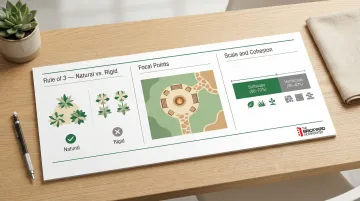
The Rule of 3 in Landscaping
The Rule of Three works on a simple premise: plants and design elements grouped in odd numbers (3, 5, 7) look more natural than even-numbered arrangements. Odd groupings keep the eye moving through a composition rather than splitting it symmetrically in half.
Applications:
- Plant three ornamental grasses in a triangular cluster
- Group five shrubs of the same variety
- Arrange three boulders of varying sizes with one dominant piece slightly off-center
The Importance of Focal Points
Every outdoor zone needs an anchor—a specimen tree, fire pit, water feature, or striking material like reclaimed brick. All other design elements should support and lead toward that focal point.
Example: In a backyard patio zone, a stone fire pit becomes the focal point. Arrange seating to face it, and use path lighting to draw the eye toward it after dark.
Scale, Proportion, and Cohesion
- Match plants and hardscape to your yard's footprint — compact plants for small spaces, bold spreading specimens for larger properties
- Balance hardscape (30–40%) with softscape (60–70%) for visual harmony
- Repeat colors, textures, or materials throughout — use the same paver style for paths and patios, or echo your home's brick (reclaimed or new) in retaining walls and borders
Conclusion
A well-designed landscape doesn't just look good — it holds up. For homeowners in Milwaukee and Southeastern Wisconsin, that means choosing cold-tolerant plants and freeze-thaw-resistant hardscape materials built to handle the region's harsh winters without losing their appeal come spring.
If you're ready to bring any of these ideas to life, The Brickyard at 3352 S. Clement Ave. in Milwaukee carries everything you need:
- Brick, cultured stone, and reclaimed materials
- Pavers, stone tiles, and retaining wall systems
- Outdoor living products — grills, fire pits, and pizza ovens
- Masonry accessories and installation supplies
In business since 1970, their team helps homeowners and contractors find the right materials for projects of any size — from a simple garden path to a full outdoor living space.
Frequently Asked Questions
What is the rule of 3 in landscaping?
The rule of 3 means grouping plants and design elements in sets of three (or other odd numbers) to create visual balance and a more natural look. Odd-number groupings prevent the eye from splitting the composition in half, keeping arrangements from feeling rigid or overly symmetrical.
What is the cheapest way to landscape your backyard?
Start with native or perennial plants that return every year, reducing replacement costs. Then build out gradually:
- Add DIY edging with metal or stone borders
- Apply mulch for a polished, low-maintenance finish
- Tackle one zone at a time rather than the whole yard at once
What are the latest trends in landscaping?
Current trends include permeable landscapes and hardscaping to absorb rainwater, wild planting (rewilding) with native species for biodiversity, and outdoor living rooms that extend interior design outdoors. Rounding out the list, low-voltage lighting and naturalistic fire features continue to show up in new outdoor designs.