Introduction
Picture this: you're standing in your Milwaukee backyard, staring at a bare patch of dirt where you envision a beautiful patio, or looking at a crumbling retaining wall that's been failing for years. You know you need professional help, but who do you call? A landscape architect? A general contractor? A landscaper who mows lawns?
Understanding what a landscape contractor does, and how to choose the right one, can mean the difference between an outdoor space that lasts decades and one that fails within a few seasons. Landscape contracting covers everything from design planning and grading to hardscape installation — patios, walkways, retaining walls — and planting.
The professional you hire and the materials they use determine whether your investment holds up through Milwaukee's punishing freeze-thaw cycles or crumbles after the first winter.
This guide covers:
- What a landscape contractor is and what services they provide
- How they differ from landscape architects
- What to look for when choosing the right professional for your Milwaukee-area project
TLDR
- Landscape contractors build outdoor spaces — covering both hardscaping and softscaping
- Unlike landscape architects, contractors do the physical construction work
- Services span site prep, hardscape installation, drainage, irrigation, lighting, and project management
- Licensed contractors are necessary for structural work, drainage fixes, and permit-required projects
- Freeze-thaw rated materials make a measurable difference in how long hardscape projects last
What Is a Landscape Contractor?
A landscape contractor is a licensed professional who combines horticultural knowledge, construction expertise, and project management skills to plan, build, and maintain outdoor spaces. According to the National Association of Landscape Professionals, landscape contractors are businesses actively engaged in landscape installation, design-build, irrigation, drainage management, and hardscape construction.
Most U.S. states regulate landscape contractors, requiring a mix of formal education, supervised work experience, technical exams, insurance coverage, and bonding. Requirements vary significantly by state. In Wisconsin, contractors performing work that requires a residential building permit must hold a Department of Safety and Professional Services (DSPS) Dwelling Contractor certification, which mandates minimum $5,000 bonding and $250,000 liability insurance.
Landscape contractors serve a broad range of clients and project types:
- Residential homeowners — patios, garden beds, retaining walls, outdoor kitchens
- Commercial clients — parking lot landscaping, building surrounds, public green spaces
- Project collaborators — architects, designers, nurseries, and material suppliers
This cross-sector scope means a single contractor may move from a backyard patio build one week to a large commercial site installation the next.
What Does a Landscape Contractor Do?
Landscape contractors translate conceptual designs into real, functional outdoor environments. Their work spans every phase of a project—from the first site assessment through final planting and cleanup.
Site Preparation & Grading
Before any installation begins, contractors assess soil conditions, clear vegetation and debris, correct drainage problems, and grade surfaces to ensure proper water flow. This step is critical—poor grading is one of the leading causes of hardscape failure and plant loss in climates like Milwaukee's.
Proper grading directs water away from structures, prevents pooling, and protects against frost heave. Contractors compact the subbase to a minimum of 95% standard Proctor density to prevent settlement and rutting.
Hardscape Installation
Hardscaping refers to the structural, non-living elements contractors build:
- Walkways and pathways
- Patios and outdoor living areas
- Retaining walls and terracing
- Steps and transitions
- Outdoor kitchens and fire pit areas
- Decorative edging and borders
In Milwaukee, proper base preparation, material selection, and installation technique determine how well these features survive freeze-thaw cycles. Improperly installed pavers or retaining walls will shift, crack, or fail within a few seasons. The Interlocking Concrete Pavement Institute confirms that depressions, rutting, and heaving result from inadequate compaction and poor drainage—not material defects.
Softscape Installation
Softscaping is the living layer: trees, shrubs, perennials, turf, mulch, and ground cover. Contractors factor in sun exposure, soil type, seasonal color, mature plant size, and maintenance requirements when selecting and placing plants.
Quality contractors match plant selections to Milwaukee's USDA hardiness zone (5b) and consider winter hardiness, drought tolerance, and pest resistance.
Irrigation, Drainage & Lighting
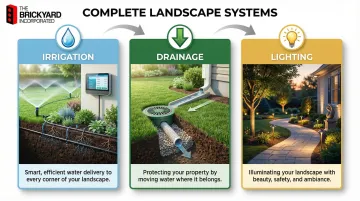
Beyond plants and hardscape, contractors handle three interconnected systems that protect and activate the finished landscape:
- Irrigation: Drip lines for garden beds, spray heads for turf, and smart controllers that adjust watering based on weather conditions
- Drainage: French drains, catch basins, and grading adjustments that redirect water away from foundations and hardscape features
- Lighting: Low-voltage path lights, uplights for trees, and accent fixtures that improve safety and extend evening usability
Project Management
Licensed contractors handle the full scope of project oversight:
- Obtaining permits and ensuring code compliance
- Sourcing materials from reputable suppliers
- Coordinating crews and scheduling subcontractors
- Managing budgets and timelines
- Communicating progress and changes to clients
This end-to-end management separates a licensed contractor from a general handyman or unlicensed worker.
Landscape Contractor vs. Landscape Architect: What's the Difference?
Landscape architects focus on design, site analysis, and planning. They produce blueprints, specify plant materials, ensure compliance with zoning regulations, and address environmental concerns. According to the American Society of Landscape Architects, landscape architecture involves the application of mathematical, physical, and natural science principles in planning and design. Landscape architects typically hold advanced degrees and are licensed separately from contractors.
Landscape contractors are the builders. They take plans (whether from an architect or developed in-house) and physically construct the outdoor space. Many projects use both professionals—the architect designs, the contractor executes.
Knowing which professional you need depends on project complexity:
| Project Type | Who to Hire |
|---|---|
| Large-scale grading, water features, commercial sites | Landscape architect first, then contractor |
| Straightforward residential hardscaping or planting | Licensed contractor (can handle planning + execution) |
| Complex residential with significant design challenges | Both — architect designs, contractor builds |
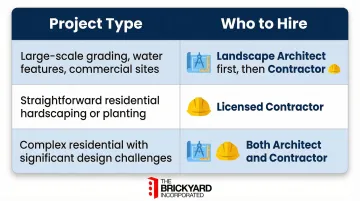
For most residential hardscaping projects — patios, retaining walls, walkways — a licensed contractor has the expertise to carry the project from concept to completion.
When Should You Hire a Landscape Contractor?
Hire a licensed landscape contractor when your project involves:
- New home construction or major renovation
- Installing walkways, patios, or retaining walls
- Upgrading or adding irrigation systems
- Addressing persistent drainage issues
- Any project requiring a permit
The risk of hiring unlicensed workers:
- Homeowners absorb full liability for injuries or property damage when no insurance is in place
- Defective or abandoned work leaves you with no financial recourse without bonding
- Unlicensed workers have no verified training or code compliance — a serious risk for structural hardscape projects
In Milwaukee specifically, the City requires building permits and engineered designs for retaining walls exceeding 4 feet in height. Unpermitted structural work can result in code violations and forced tear-downs.
Those permit risks don't exist in isolation. Milwaukee's freeze-thaw cycle puts additional stress on any hardscape work that isn't installed correctly. Improperly set pavers or retaining walls will shift, crack, or fail within a few seasons — making professional installation far cheaper than repair or replacement down the road.
How to Choose the Right Landscape Contractor
Verify Licensing and Insurance First
Confirm the contractor holds the appropriate state license, carries general liability insurance, and is bonded. In Wisconsin, use the DSPS LicensE Portal to verify Dwelling Contractor certifications. Ask for documentation and verify it independently.
Review Their Portfolio Critically
Look for projects similar in scope and materials to yours. Pay attention to:
- Joint alignment in pavers (consistent spacing indicates quality installation)
- Quality of retaining wall construction (straight, level courses)
- How plantings look over time (ask for before/after photos or references from past clients)
Get Multiple Detailed Written Quotes
Any written proposal worth signing should be fully itemized. According to Wisconsin DATCP consumer guidance, your contract must include:
- Detailed list of materials (brand, size, quantity)
- Starting and completion dates
- Total price and payment schedule
- Warranty information
- Permit responsibility
Be wary of vague estimates or quotes significantly lower than others without explanation.
Ask About Material Sources and Quality
Once you've reviewed the quote, dig into the materials behind it. The durability of your finished project depends on the quality of brick, pavers, stone, or retaining wall blocks used — a knowledgeable contractor will be transparent about sourcing and product choices.
For Milwaukee projects, this matters more than most. Materials must meet strict freeze-thaw durability standards: concrete pavers should meet ASTM C936 standards (minimum 8,000 psi compressive strength, max 5% absorption) and pass ASTM C1645 freeze-thaw testing.
Check Reviews and Ask for References
When scanning reviews across platforms, look for consistent patterns in:
- Communication responsiveness throughout the project
- Meeting timelines and staying on budget
- Quality of finished craftsmanship
A contractor with 4.0+ stars and detailed (not just star-only) reviews across Google, Houzz, or Yelp is worth a closer look. Fewer than 10 reviews warrants extra caution.
Contact past clients directly and ask:
- Did the contractor stay on schedule and budget?
- How did they handle unexpected issues?
- Would you hire them again?
Why Quality Materials Make or Break Your Landscape Project
Even the most skilled contractor is limited by the materials they use. Low-quality pavers crack under freeze-thaw stress. Poorly manufactured retaining wall blocks bow over time, and inferior brick can spall or stain within a few seasons in Wisconsin's climate.
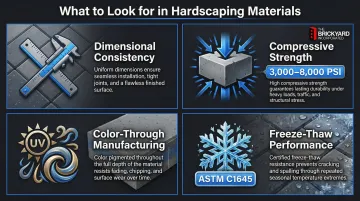
What to Look for in Hardscaping Materials
- Dimensional consistency directly affects joint spacing and structural stability — variations in block or paver size lead to uneven surfaces and compromised interlock.
- Compressive strength must match the application. Pedestrian areas need less than vehicular driveways; segmental retaining wall blocks should meet minimum 3,000 psi.
- Color-through manufacturing resists fading and staining over time — ask your supplier whether UV-stable pigments were used throughout the material, not just on the surface.
- Freeze-thaw performance is critical in Milwaukee. Concrete pavers should pass ASTM C1645 freeze-thaw testing in saline solution to hold up against de-icing salts.
Sourcing Materials Locally
Homeowners and contractors in Milwaukee rely on local suppliers with deep regional expertise. The Brickyard—with over four decades of experience and the largest selection of brick, pavers, cultured stone, retaining wall systems, and outdoor living products in Southeastern Wisconsin—sources materials matched to the region's climate and construction standards.
Whether you're a contractor or a DIYer, their staff can advise on material specifications, freeze-thaw ratings, and product suitability — including hard-to-match reclaimed brick and natural stone.
Frequently Asked Questions
How much does a landscape contractor cost?
Costs vary widely based on project scope, materials, and region. Basic landscaping may run a few thousand dollars, while full hardscape and softscape installations can reach tens of thousands. Retaining walls average $6,073 ($3,196–$9,201), while paver patios average $4,003 ($2,000–$5,800). Always get multiple itemized quotes.
What are the main duties of a landscape contractor?
Core duties include site preparation and grading, hardscape installation (patios, walls, walkways), softscape installation (plants, turf), irrigation and drainage systems, lighting installation, and full project management from permitting through completion.
What is the meaning of landscape construction?
Landscape construction is the physical building phase of a project: grading, installing hardscape structures, planting, and implementing functional systems like irrigation and lighting to turn design plans into finished outdoor spaces.
What is the difference between a landscape architect and a contractor?
Landscape architects design and plan outdoor spaces, holding advanced degrees and a separate license. Landscape contractors build and install, executing the physical construction. Many projects use both, but simpler residential projects can often be handled by a licensed contractor alone.
Do I need a landscape contractor for a hardscape project?
Structural hardscape work like patios, retaining walls, and walkways always warrants a licensed contractor. In Milwaukee's freeze-thaw climate, precise base preparation, proper drainage, and durable materials aren't optional — they determine whether the installation lasts.
What materials do landscape contractors typically use for hardscaping?
Common materials include concrete pavers, natural stone, brick, cultured stone, retaining wall blocks, and specialty items like thin brick or reclaimed stone. Material choice affects both aesthetics and long-term durability—especially critical in freeze-thaw climates.