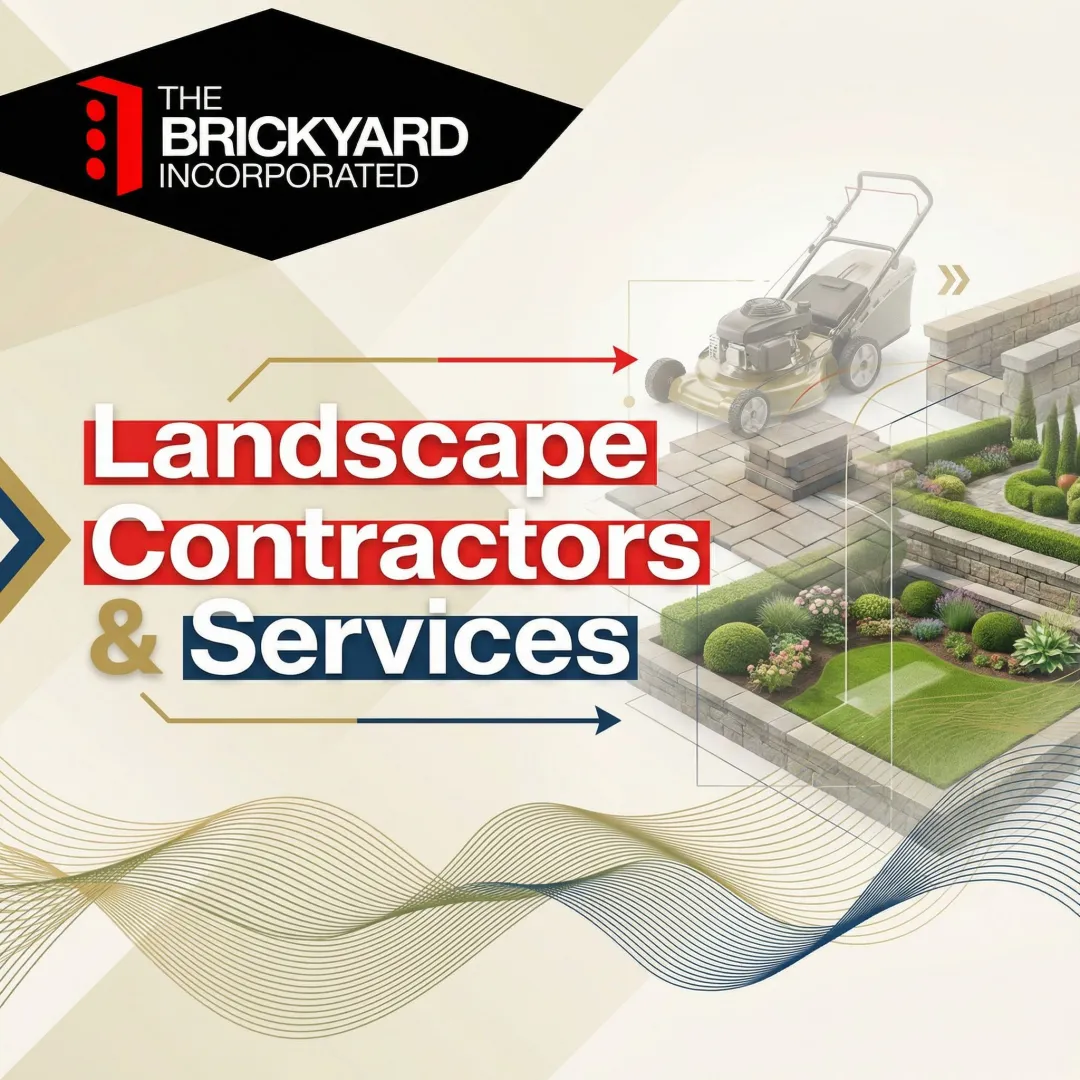
This guide breaks down what landscaping contractors actually do, the services they offer, how to hire the right one, and what you can expect to pay. Whether you're planning a full outdoor transformation or just need someone to keep your grass in check, understanding the landscape industry will save you time, money, and headaches.
TLDR
- Landscaping contractors handle design, installation, and structural work—not just mowing
- Lawn services focus on recurring maintenance like mowing, fertilizing, and seasonal cleanups
- Hardscaping like patios and retaining walls can recover up to 95% of project cost at resale
- Pricing varies widely: lawn care runs $100–$500/month; full installs are quoted by project scope
- Before hiring, verify insurance, check references, and collect at least three written estimates
What Do Landscaping Contractors Do?
A landscaping contractor is a professional hired to design, install, and sometimes maintain outdoor spaces. Their work ranges from planting beds and grading to building patios, walkways, retaining walls, and outdoor kitchens. According to the U.S. Bureau of Labor Statistics, landscaping workers are responsible for creating new outdoor environments—they grade land, install irrigation systems, plant trees, and construct hardscapes like decks and walkways.
This is different from a general handyman or lawn care worker. Landscaping contractors tackle larger, more complex projects that often require permits, heavy equipment, and skilled labor. Most full-service contractors work across two broad categories: softscaping and hardscaping.
Softscaping vs. Hardscaping
Landscaping contractors typically work in two broad categories:
- Softscaping: The living elements—plants, turf, trees, soil, mulch, and irrigation systems
- Hardscaping: The structural components—pavers, retaining walls, patios, fire pits, walkways, and outdoor living features
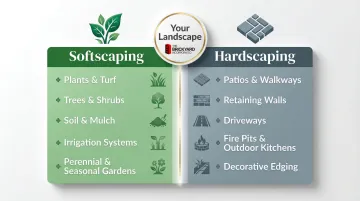
Many full-service contractors handle both, which allows them to design cohesive outdoor spaces that blend function and aesthetics.
Beyond installation, many contractors also offer design consultations to help homeowners plan the full outdoor space before any work begins. This upfront step keeps the project aligned with your vision, budget, and property layout.
Landscaping contractors work on both residential and commercial properties. Project scale can range from a single weekend patio install to a multi-month estate transformation involving grading, drainage, planting, and structural work.
Lawn Services vs. Full-Service Landscaping: What's the Difference?
"Lawn services" typically refers to recurring maintenance tasks: mowing, edging, fertilizing, weed control, and seasonal cleanups. These are the crews you see weekly during the growing season, keeping your existing yard looking tidy.
Full-service landscaping covers installation, design, and structural work. Keeping an existing yard maintained? A lawn care service may be all you need. Transforming or building out an outdoor space — adding a patio, installing a retaining wall, redesigning the entire layout — calls for a full landscaping contractor.
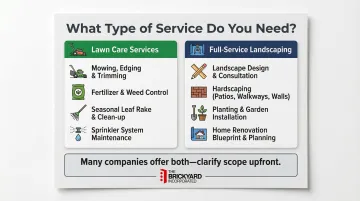
Here's a quick breakdown of what each typically includes:
Lawn Care Services
- Mowing, edging, and trimming
- Fertilizing and weed control
- Seasonal cleanups (spring/fall)
- Irrigation maintenance
Full-Service Landscaping
- Design and project planning
- Hardscape installation (patios, retaining walls, walkways)
- Planting, grading, and drainage work
- Full landscape renovations
Many companies offer both, so clarify scope upfront — quotes can vary widely depending on whether you're asking for maintenance or a full build-out.
Common Services Offered by Landscaping Contractors
Softscaping Services
Softscaping covers the living components of your landscape. Core services include:
- Lawn installation: Seeding or sod installation for new or renovated lawns
- Planting beds: Shrub and tree planting, perennial gardens, and seasonal color
- Mulching: Protective ground cover that retains moisture and suppresses weeds
- Grading and drainage: Correcting slope issues to prevent water pooling or erosion
- Irrigation systems: Automated sprinkler systems for efficient watering
Softscaping requires seasonal attention and ongoing maintenance to look its best year-round. According to the National Association of Realtors, standard lawn care service recovers an estimated 217% of its cost at resale, making it one of the highest-ROI home improvements available to homeowners.
Hardscaping Services
Hardscaping adds structure and functionality to outdoor spaces. Common projects include:
- Patios and walkways: Using pavers, natural stone, or concrete
- Retaining walls: Structural walls that manage elevation changes and prevent erosion
- Driveways: Paver or concrete installations designed for vehicle traffic
- Outdoor kitchens and fire pits: Built-in grills, countertops, seating walls, and fire features
- Decorative edging: Borders that define planting beds and lawn areas
The quality of materials used directly impacts how long these features last and how they look over time. New patios recover 95% of their cost at resale and earn a homeowner satisfaction score of 9.9 out of 10.
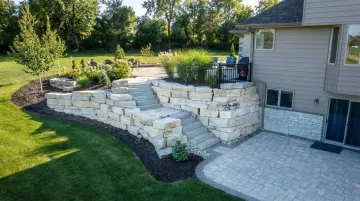
For Milwaukee-area projects, material selection matters as much as installation quality. The Brickyard has supplied local contractors and homeowners with pavers, cultured stone, retaining wall systems, and reclaimed brick since 1970—stocking one of the broadest hardscape inventories in southeastern Wisconsin.
Seasonal and Specialty Services
Many landscaping contractors offer additional services that keep your property functional and attractive year-round:
- Snow removal: Critical in Wisconsin, where winter regularly runs five months
- Landscape lighting: Low-voltage systems that highlight features and improve safety
- Drainage solutions: French drains, dry wells, and grading corrections
- Seasonal planting changeovers: Rotating annuals for spring, summer, and fall color
Working with one contractor across multiple seasons means fewer site visits to get up to speed—and a consistent result from spring plantings through winter cleanup.
Hardscaping vs. Softscaping: Why Your Project Needs Both
The most impactful outdoor spaces blend hardscaping and softscaping. Structures like patios and retaining walls provide the "bones," while plants, grass, and trees add life, color, and texture.
Hardscaping solves practical problems, too:
- A well-placed retaining wall controls erosion on sloped yards
- A stone pathway defines traffic flow and protects turf
- A patio adds usable square footage for entertaining or storage
Without softscaping to balance those hard edges, though, the space feels sterile. The two elements reinforce each other — which is also why the materials you choose for hardscaping matter more than most homeowners realize.
Choosing Materials Built for Wisconsin's Climate
Material quality directly determines how long your hardscape lasts. Natural stone, quality pavers, and properly installed retaining wall systems outlast cheap alternatives by decades. In Wisconsin's freeze-thaw climate, the wrong materials crack, shift, and deteriorate within a few seasons.
Ask contractors specifically what materials they use and why. Interlocking concrete pavers, for example, comprise 77% of segmental concrete pavement products sold because they resist freeze-thaw cycles and deicing salts while offering design flexibility.
How to Hire the Right Landscaping Contractor
Verify Licensing and Insurance
Any reputable landscaping contractor should carry general liability insurance and, depending on the state or municipality, hold applicable contractor licenses. In Wisconsin:
- Pesticide application requires a Commercial Pesticide Application Business License from the Wisconsin DATCP — mandatory for any contractor applying fertilizers mixed with pesticides
- Structural hardscaping on 1-2 family dwellings may require a Dwelling Contractor certification from the Wisconsin DSPS if the project triggers a building permit
Always verify credentials before signing a contract.
Review Their Portfolio
Ask to see completed projects similar in scope to yours. Look for consistency in craftsmanship, especially on hardscape work where edges, joints, and leveling reveal quality. If a contractor can't show you comparable examples, keep looking.
Get and Compare Quotes
Get at least three written estimates. Ensure each one breaks down labor vs. materials. Be cautious of bids that seem significantly lower than others—this often signals cut corners or inferior materials.
A low bid that can't be explained through line-item detail is a red flag. The next step is asking questions directly — written estimates rarely capture everything.
Ask the Right Questions
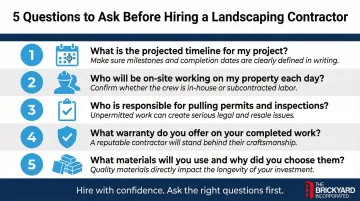
Before hiring, ask:
- How long will the project take?
- Who will be on-site daily—your own crew or subcontractors?
- Do you handle permits, or is that my responsibility?
- What is the warranty on your work?
- What materials will you use, and why?
Set Clear Expectations in Writing
Your contract should include:
- Project timeline with start and completion dates
- Payment schedule (never pay the full amount upfront)
- Detailed scope of work
- What happens if there are weather delays or material shortages
- Whether the quote includes material delivery, site prep, cleanup, and debris disposal
A well-written contract protects both parties — and signals whether a contractor operates professionally before work even begins.
How Much Do Landscaping Contractors Charge?
Landscaping costs break into two categories: recurring maintenance and one-time installation projects. Knowing typical ranges upfront helps you evaluate quotes and budget realistically.
Recurring Lawn Care
Small maintenance-based lawn services are typically charged per visit or as a monthly flat rate. According to consumer data:
- Per-visit mowing: $49–$204, averaging $123
- Monthly lawn care: $100–$500, averaging $300
Installation and Hardscape Projects
Installation and hardscape projects are quoted by the project based on square footage, materials, and labor hours.
Softscaping:
- Sod installation: $1–$6 per square foot, averaging $2,064 for a typical yard
- Mulch delivery and install: $30–$150 per cubic yard
Hardscaping:
- Paver patio: $8–$25 per square foot, averaging $3,800 for 280 square feet
- Retaining wall: $30–$50 per square foot of face area, averaging $6,073
Material selection drives a significant portion of hardscape project costs. Premium pavers, natural stone, and quality retaining wall block cost more upfront but outlast cheaper alternatives by decades — making sourcing decisions as important as contractor selection.
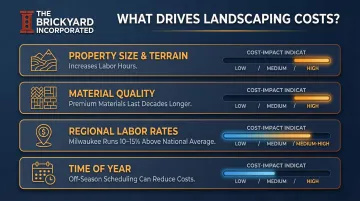
Key Cost Factors
- Property size and terrain complexity: Hard soil, tree roots, and poor access for machinery increase labor hours
- Material quality: Premium pavers and natural stone cost more upfront but last decades longer
- Regional labor rates: Milwaukee-area labor rates typically run 10–15% above national averages, which affects contractor quotes on larger projects
- Time of year: Scheduling in the off-season (late fall or early spring) can sometimes reduce costs
Avoid Billing Surprises
Ask contractors upfront whether their quote includes:
- Material delivery
- Site prep and excavation
- Cleanup and debris disposal
These are frequent add-ons that inflate the final bill if not clarified.
Frequently Asked Questions
What do landscaping contractors do?
Landscaping contractors design, install, and maintain outdoor spaces. They handle both softscaping (plants, turf, trees) and hardscaping (patios, walkways, retaining walls) depending on their specialization.
How much do landscaping contractors charge?
Costs vary widely based on project scope. Recurring lawn services range from $100–$500 per month, while full landscaping installations are quoted by project. Get multiple written estimates and research regional averages before committing.
What is the rule of 3 in landscaping?
The rule of 3 is a design principle where plants or elements are grouped in odd numbers (especially threes) to create a more natural, visually balanced look. It's a guideline often applied during planting bed design.
What is the difference between a landscaper and a lawn care service?
A lawn care service focuses on routine maintenance (mowing, fertilizing, weed control) while a landscaper handles design, installation, and structural outdoor work. Many companies offer both, so confirm scope upfront.
Do I need a permit for landscaping work?
Permits are typically required for structural work like retaining walls above a certain height, drainage modifications, or hardscape installations near property lines. Ask your contractor and check with your local municipality before starting work.
How do I find a reliable landscaping contractor near me?
Start with verified reviews on Google or local directories. From there:
- Ask for proof of liability insurance and workers' comp
- Request references from past clients with similar projects
- Prioritize contractors with hands-on experience in the type of work you need (hardscaping, lawn maintenance, or both)