Introduction
When homeowners think about increasing property value, they often picture expensive kitchen remodels or bathroom renovations. Yet research reveals a surprising truth: outdoor improvements consistently outperform interior upgrades in return on investment. According to the 2023 NAR Remodeling Impact Report, standard lawn care service recovers 217% of its cost, while an upscale major kitchen remodel recoups just 36%.
Many homeowners assume "value-boosting landscaping" requires expensive contractors and major overhauls. In reality, targeted projects can sharply improve curb appeal and resale value at a fraction of the cost.
This guide covers 11 specific, affordable landscaping projects—from front yard upgrades to backyard hardscape features—that deliver strong returns. Whether you're planning to sell soon or simply want to improve your home's outdoor appeal, each project is chosen for real impact on a realistic budget.
TLDR
- Landscaping improvements can increase home value by 6% to 13%, with some projects recovering over 200% of costs
- Paver walkways, native garden beds, and landscape edging boost curb appeal fast — often at low cost
- Paver patios and retaining walls add functional outdoor living space buyers consistently prioritize
- Low-voltage lighting and fresh mulch deliver strong visual impact for minimal cost
- Prioritize projects based on your home's specific weaknesses for maximum return
Why Landscaping Is One of the Best Investments for Your Home
Curb Appeal Drives Buyer Decisions
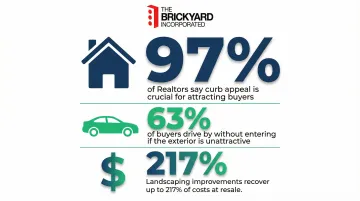
Unlike interior renovations that buyers discover only after stepping inside, landscaping improvements are immediately visible from the street. 97% of Realtors state that curb appeal is crucial for attracting buyers, and 63% of homebuyers will drive by a listing without going in if the exterior is unattractive. First impressions happen in seconds, and a well-maintained landscape signals to potential buyers that the entire property has been cared for.
Affordable Doesn't Mean Low-Impact
"Affordable" landscaping doesn't mean compromising on quality or results. Material costs for both hardscape and softscape features are accessible for DIYers and small contractor jobs when sourced from local suppliers:
- Hardscape: pavers, natural stone, edging
- Softscape: mulch, native plants, perennials
The key is selecting projects that deliver visual impact without requiring professional installation or premium materials.
Climate-Appropriate Materials Protect Your Investment
Material selection doesn't stop at budget — in Milwaukee and Southeastern Wisconsin, your choices also need to survive freeze-thaw cycles. Concrete pavers meeting ASTM C936 standards resist cracking far better than poured concrete, while cold-hardy native plants like coneflowers and ornamental grasses survive harsh winters with minimal maintenance. Durable materials protect your investment year-round and eliminate costly repairs down the road.
Front Yard Projects That Boost Curb Appeal and Value
The front yard is a buyer's first impression and your neighbor's daily view. Even modest improvements here signal a well-maintained property and drive perceived value. The four projects below cover the highest-impact upgrades—from walkways to entry accents—at a range of budgets.
Project 1: Install a Paver Walkway or Natural Stone Path
A defined, attractive walkway from the driveway or street to your front door instantly elevates your home's appearance and safety. Installing a paver walkway delivers more than an 80% return on investment—strong enough to recoup most of your material costs when you sell.
Why pavers outperform poured concrete:
- Accommodate natural ground movement without cracking
- Individual units can be replaced if damaged
- Better freeze-thaw resistance when meeting ASTM C936 standards
- Wide variety of colors, patterns, and textures
The Brickyard carries natural stone paving products, pavers, and reclaimed materials suited for Wisconsin winters—including the largest stock of reclaimed brick and paving stones in the U.S.
Project 2: Create Native or Perennial Garden Beds with Mulch
Replacing bare ground or struggling turf with defined garden beds planted with cold-hardy native perennials delivers year-round visual interest with low ongoing maintenance. Landscape maintenance including perennial plantings recovers 104% of its cost at resale.
Best native perennials for Zone 5:
- Black-eyed Susans (Rudbeckia) - Hardy in Zones 3-9, bright yellow blooms
- Coneflowers (Echinacea) - Drought-tolerant, attracts pollinators
- Ornamental grasses - Provide winter interest and movement
Applying 2 to 3 inches of mulch suppresses weeds, retains moisture, and gives beds a polished look that buyers notice immediately. Avoid applying more than 3 to 4 inches, as excessive mulch can harm root systems and prevent water from reaching the soil.
Project 3: Add Landscape Edging for Clean, Defined Borders
Crisp edging between lawn and garden beds, driveways, and walkways is one of the lowest-cost, highest-visual-impact improvements available. Proper landscape edging can increase property value by 5.5% to 12.7% while reducing maintenance time.
Material options for freeze-thaw climates:
| Material | Lifespan | Cost per Linear Foot | Freeze-Thaw Performance |
|---|---|---|---|
| Aluminum | 30+ years | $3.00 - $8.00 | No rust or cracking |
| Steel | 20-40+ years | $3.50 - $12.00 | Holds shape against frost heaving |
| Natural Stone | 30-100+ years | $12.00 - $70.00 | Granite/basalt resist freeze-thaw |
| Brick | 20-50+ years | $2.50 - $6.50 | Durable but can shift without proper base |
| Plastic | 3-5 years | $1.00 - $3.50 | Susceptible to UV degradation and brittleness |
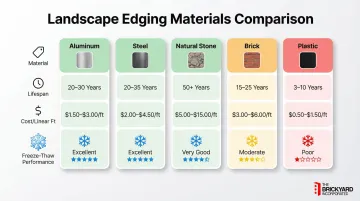
Steel, aluminum, and natural stone provide permanent, professional-grade borders that eliminate the need for constant re-edging. In Wisconsin's freeze-thaw cycles, the cost difference between quality edging and plastic replacements adds up fast.
Project 4: Upgrade the Front Entry with Stone Accents or Potted Plants
Simple additions like flanking the front door with stone planters, adding a stone or brick accent border around steps, or installing container plants create a welcoming focal point. Manufactured stone veneer delivers a massive 208% cost recovery, the strongest return of any exterior upgrade in the Cost vs. Value report.
Cost-effective entry upgrades:
- Thin brick or cultured stone accents on entry stairs or pillars
- Paired stone planters with seasonal flowers
- Brick or stone border around existing concrete steps
- Decorative address numbers on stone backing
The Brickyard carries thin brick in both new and reclaimed varieties, along with cultured stone options for front entry applications. Their sales staff can help match reclaimed materials to your existing masonry—and their custom brick cutting service lets reclaimed pieces install like tile while keeping an authentic historical character.
Backyard and Outdoor Living Projects That Add Real Value
Buyers increasingly evaluate homes based on outdoor living potential. A functional, inviting backyard adds livable square footage without the cost of an addition.
Project 5: Build a Paver Patio
A well-installed paver patio is one of the single highest-ROI landscaping investments. Installing an 18-by-16-foot concrete paver patio recovers 95% of its cost at resale and earns a near-perfect 9.9 out of 10 Joy Score from homeowners.
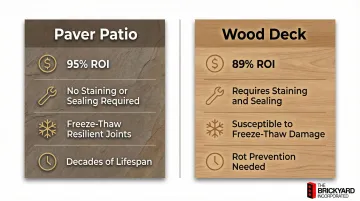
Paver patios vs. wood decks:
- Higher ROI: 95% vs. 89% for wood decks
- Lower maintenance: No staining, sealing, or rot prevention
- Better freeze-thaw resilience: Joints accommodate expansion and contraction
- Longer lifespan: Decades of use with minimal upkeep
The Brickyard carries pavers, retaining wall units, and hardscape supplies sized for Milwaukee-area projects. Their sales staff can help you match materials to your design and confirm they're rated for Midwest freeze-thaw conditions.
Project 6: Install a Retaining Wall for Slope Management and Aesthetics
Retaining walls solve practical slope or erosion problems while creating terraced planting areas and visual structure. Even modest retaining walls in natural stone or concrete block add a professional, finished look and cut down on ongoing maintenance headaches.
Functional benefits:
- Convert unusable slopes into flat, functional space
- Prevent soil erosion on sloped properties
- Create defined planting zones at different elevations
- Add architectural structure to terraced and graded landscapes
In Midwest climates, retaining wall units must withstand immense pressure from freezing and thawing soil moisture. Segmental retaining wall (SRW) units should be tested according to ASTM C1262 standards to ensure freeze-thaw durability. Proper installation with adequate drainage is critical—inadequate sub-drainage can cause premature deterioration and collapse.
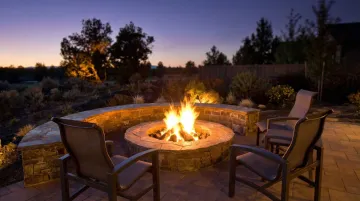
Project 7: Add a Fire Pit or Outdoor Gathering Area
A fire pit or simple defined gathering area signals outdoor living value to buyers without requiring a major build. While the direct financial cost recovery for a fire feature is 56%, the project earns a 9.7 out of 10 Joy Score, and homes with fire pits get 19% more saves online.
Budget-friendly fire pit options:
- DIY stone or brick ring with gravel base
- Prefabricated metal fire pit bowl
- Gas burner insert with decorative rock
- Simple paver or gravel seating area surrounding feature
Milwaukee fire pit regulations: City of Milwaukee Ordinance 214-9 allows backyard fire pits provided they are built of metal, concrete, or brick, are well covered or screened to prevent sparks, and are placed at least 15 feet from any combustible structure.
Project 8: Define Garden Beds with Stone or Brick Borders
Adding stone or brick garden bed borders in the backyard creates organized planting zones, reduces maintenance by containing mulch and plants, and adds a designed, intentional look that casual maintenance alone can't replicate. These borders bring out the curves of beds and make the landscape flow, signaling meticulous care to potential buyers.
Budget-Friendly Finishing Touches That Make a Big Difference
After structural and planting projects, a handful of low-cost finishing touches can tie the yard together and sharpen how the property presents to buyers.
Project 9: Install Low-Voltage Landscape Lighting
Pathway lighting, uplighting on trees, and accent lights around hardscape features extend your home's visual appeal into the evening, improve safety, and signal a well-designed outdoor space. Low-voltage LED landscape lighting earns a perfect 10 out of 10 Joy Score and recovers 59% of its cost.
LED lighting advantages:
- Use at least 75% less energy than incandescent bulbs
- Last up to 25 times longer
- 12V low-voltage systems carry little shock risk
- Safe, easy DIY installation for homeowners
Good placement highlights architectural features, guides visitors along walkways, and sets the mood for outdoor entertaining — with minimal ongoing energy costs.
Project 10: Plant Trees or Shrubs Strategically
A well-placed shade tree or grouping of evergreen shrubs adds long-term value through energy savings, privacy, and seasonal interest. Each large front-yard tree is associated with about a 1% increase in home sales price, and windbreaks reduce winter heating costs by 10% to 12%.
The "rule of threes" for visual balance:
Plant shrubs in odd-numbered groupings: three, five, or seven plants of the same species create naturally balanced arrangements. The eye reads an odd-numbered cluster as a single unified mass rather than scattered individual plants.
Zone 5 tree recommendations for Milwaukee:
- Red Maple - Fast-growing with brilliant fall color
- Bur Oak - Majestic, long-lived native
- Serviceberry - White spring flowers, edible berries, compact size
Project 11: Refresh Mulch and Add Decorative Rock or Gravel Areas
A fresh layer of mulch in all visible garden beds is one of the most affordable ways to make beds look fresh before a sale or for ongoing curb appeal. Mulch should be applied 2 to 3 inches deep and replaced every 1 to 3 years as it decomposes.
When to use decorative rock instead of mulch:
| Application | Best Material | Why |
|---|---|---|
| Active garden beds around trees and shrubs | Organic mulch | Improves soil health as it decomposes, retains moisture |
| Walkways and high-traffic areas | Decorative rock/gravel | Stays in place, zero maintenance, permanent |
| Sloped areas prone to erosion | River rock | Prevents mulch washout, provides stability |
| Foundation plantings | Decorative rock | Doesn't pile against house, reduces mowing edges |
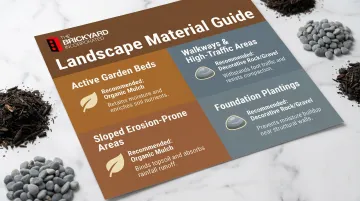
Decorative gravel and river rock add texture and reduce long-term maintenance. The Brickyard carries a broad selection of decorative rock, gravel, and natural stone options suited to Milwaukee-area landscapes — worth browsing before your next project.
How to Choose the Right Projects for Your Home
Not every home needs all 11 projects. Start by walking your property from the street as a buyer would and identifying the most obvious visual weaknesses—cracked walkway, bare dirt beds, undefined edges, unused backyard space.
Priority framework:
- Front yard projects first - Curb appeal impacts perceived value before buyers enter
- Functional backyard additions - Patio, retaining wall, fire pit area
- Finishing touches - Lighting, mulch refresh, strategic plantings
Tie project selection to your home's price range and neighborhood context. High-end neighborhoods reward more investment in premium materials and professional installation. Starter-home neighborhoods have a lower value ceiling, making DIY projects with quality materials the smarter choice.
In climates with harsh winters like Milwaukee's, cheap materials don't just underperform—they actively hurt curb appeal. To protect your improvements long-term:
- Choose pavers that meet ASTM C936 standards for freeze-thaw durability
- Use steel or stone edging instead of plastic, which warps and heaves
- Select native plants adapted to Zone 5 conditions for low-maintenance growth
Frequently Asked Questions
What is the rule of 3 in landscaping?
The rule of 3 refers to planting in odd-numbered groupings—typically three plants of the same species—to create visually natural and balanced arrangements. Even-numbered groupings can look rigid or artificial, while odd numbers help the eye move naturally around the landscape.
How much can landscaping increase home value?
A well-landscaped home can add approximately 6% to 13% in value compared to a property with no landscaping. Homes with updated hardscaping and landscaping see up to 10% to 15% higher value overall.
What landscaping projects have the best ROI?
The highest-return landscaping projects are:
- Standard lawn care service — 217% cost recovery
- Manufactured stone veneer installation — 208% cost recouped
- Landscape maintenance with perennial plantings — 104% cost recovery
What is the cheapest landscaping option to improve curb appeal?
Mulching existing garden beds, adding landscape edging, and planting native perennials are among the lowest-cost improvements with immediately visible results. A fresh 2-to-3-inch layer of mulch across all beds can transform a yard's appearance for just a few hundred dollars.
Does a paver patio add value to a home?
Yes. Paver patios offer strong ROI because they create usable outdoor living space, require minimal maintenance compared to wood decks, and appeal to a broad range of buyers. Installing a concrete paver patio recovers an estimated 95% of its construction cost at resale.
What landscaping should I do before selling my house?
Focus on front yard curb appeal first: clean edging, fresh mulch, and a defined walkway make the strongest first impression. Address any obvious backyard eyesores like overgrown beds or broken hardscape before listing.